 (650) 442-1470


 (650) 442-1470
The situation
A clinic that couldn’t afford to close
When one of San Bruno’s local pet hospitals called Caccia Home Services about a backed-up mainline, we jumped into action. Getting technicians there as quickly as possible was the best way to help them keep caring for local pets.
What’s at stake
Why it matters
Why every clog is a potential risk for infection
The longer a blocked mainline goes unaddressed, the higher the risk of a total backup. Research shows that contamination from sewage can last for months and carry some of the most dangerous germs.
Sources: University of Maryland School of Public Health Water Emergency Team pilot study of 40 Baltimore properties (2022), published in the Journal of Water & Health; Institute of Inspection Cleaning and Restoration Certification (IICRC) S500 water classification standard; U.S. Centers for Disease Control and Prevention. Figures describe residential and general building exposure; veterinary and medical settings have more serious sterilization requirements.
Phase 01 · Containment
Assessment and setup
Surface-level service calls are not an option when this much is at stake. Assessing the plumbing and protecting the room always comes first.
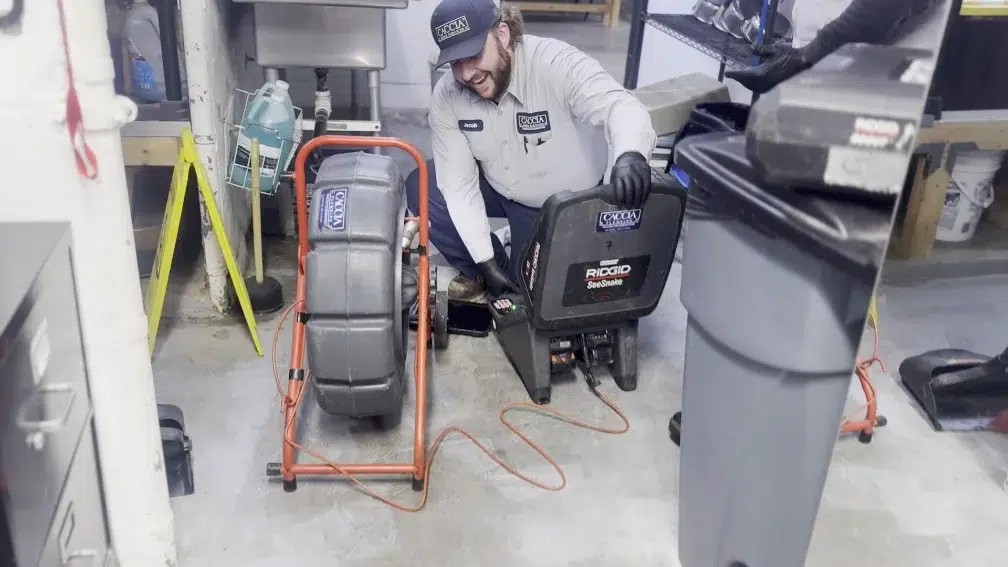
Jacob sets up the worksite before starting work on the clog.
Technicians Connor and Jacob arrived shortly after the call and began assessing the situation. A look at the visible portion of the drain, along with a few questions, pointed to either a localized clog or a mainline stoppage.
The visible portion of the drain only tells part of the story. Rather than guess at the cause, Jacob’s plan was to send the camera down the line to locate the blockage directly.
First, they set up the work area so wastewater could not spread further into the clinic. Containment is critical for infection control in veterinary hospitals and other medical settings, so it should never be skipped.
Phase 02 · Clearing
Clearing the line
Next, Jacob ran the RIDGID SeeSnake, a professional plumbing camera on a long push rod, down the line. Stopping when he felt resistance let him locate and inspect the blockage.
To clear it, Connor stepped in with our Spartan 1065 drum sewer auger. It is a much more powerful machine-driven tool built for even the most stubborn blockages.
The Spartan 1065 is safe and effective only in the hands of an experienced professional. Even if you have access to one, you should never try to handle the job yourself. At this point, the call was only half over.
Phase 03 · Inspection
The camera inspection
Why it is necessary
With the line cleared, it was time to run the RIDGID SeeSnake down the line again. It is the only real way to confirm the line is clear, so the blockage does not just re-form further down.
Camera inspections matter for another reason, too. Sometimes a clog is really a symptom of tree root intrusion, partial debris pileups, scale buildup, cracks, or structural failures like bellied or offset pipes. Miss them, and the next service call could be much more serious than a simple blockage.
That is unacceptable anywhere, but it is more worrying in a medical setting. Repeat service calls add overhead for the clinic, and every incident is another chance for contaminated wastewater to disrupt operations and drive up repair costs.
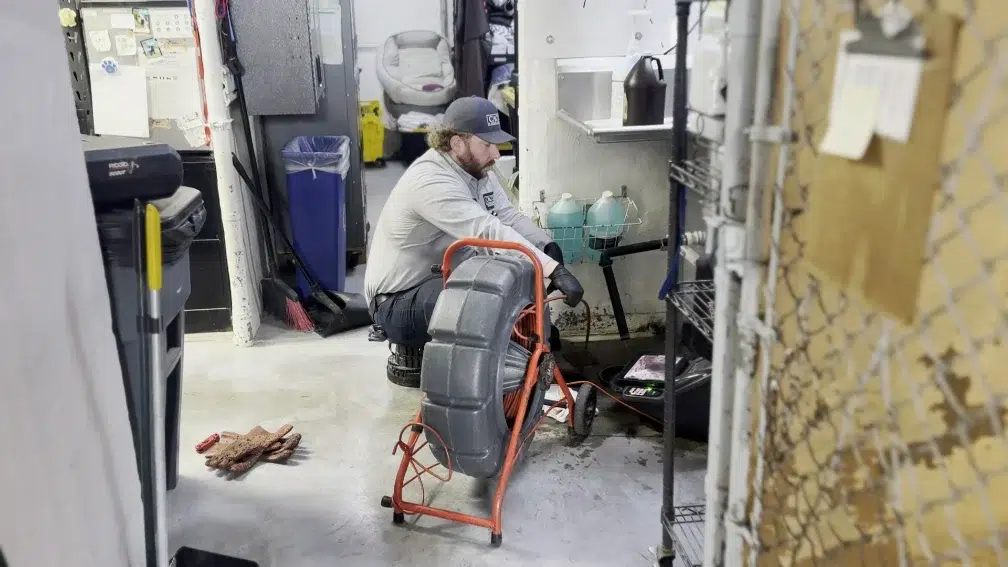
The RIDGID monitor sits on the floor, streaming live footage from inside the pipe as the camera advances.
The top 10 causes of mainline clogs in medical settings
How it is done
Jacob set the RIDGID monitor on the floor in a safe spot beside the access point. The system’s main feature is a flexible push rod with a self-leveling camera at the tip, which feeds live footage back to the monitor as it advances.
A keen eye is critical here. Technicians have to watch for even the most subtle signs of a pipe breakdown or failure along the entire length of the pipe.
The reason? A tiny hairline crack or offset can turn into a severe sewage backup or total sewer line failure without warning. Early detection makes it easier for businesses to fix problems for less or, if necessary, schedule a trenchless repair.
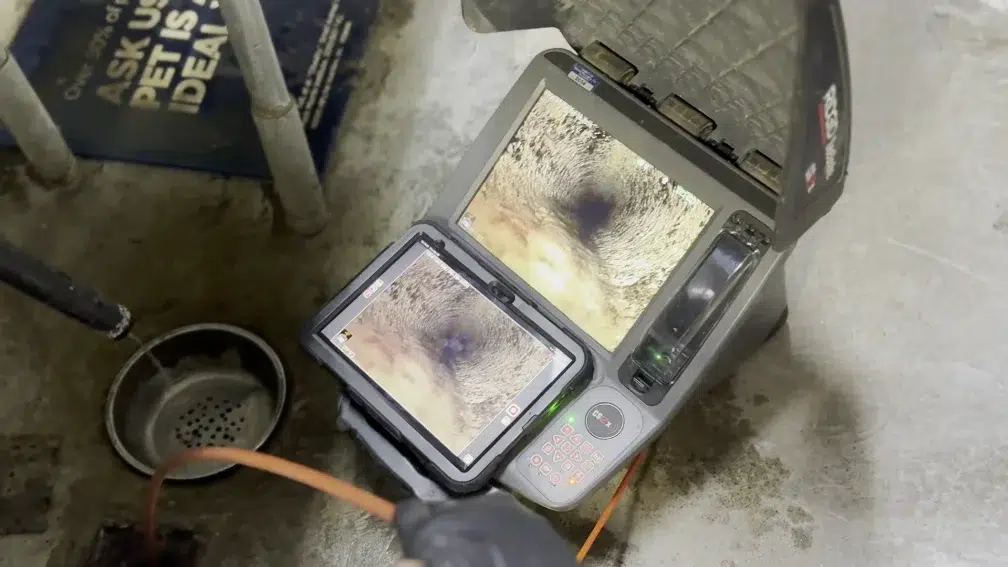
Jacob feeds the self-leveling camera head down the line, watching for cracks, offsets, and other hidden damage.
Phase 04 · Sign-off
Final verification and cleanup
Once Jacob was satisfied there were no other issues, he withdrew the camera and began the final inspection. The exact process varies by situation. Here, it meant flushing water down all the drains and confirming proper flow.
The last step was to remove all equipment and properly clean the worksite. Once he finished, the hospital was able to carry on operating right away.
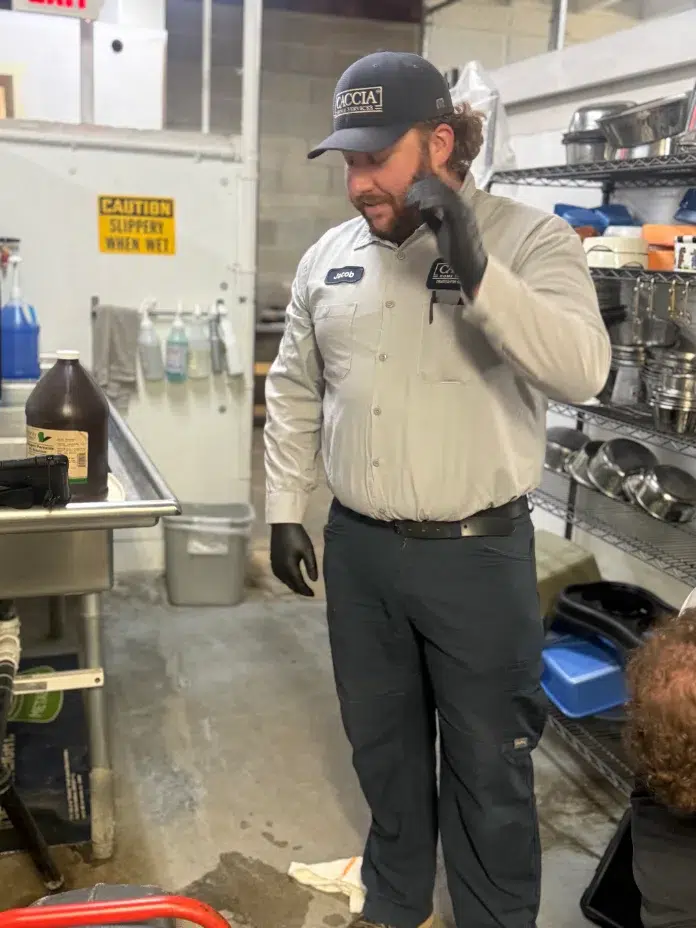
With the line clear, Jacob removes his equipment and cleans the worksite before leaving.
The result
Real results for sensitive medical settings
With the blockage cleared and the work area fully restored, the clinic could turn its attention back to patient care without spending extra time cleaning up after the service.


