(650) 442-1470

 (650) 442-1470
Updated February 2026
Summary:
In most areas of California, homes and properties have their own sewer line that runs from within the building to the municipal sanitary sewer system. Wastewater travels from the home all the way to local treatment centers, then is released into the bay. Stormwater is collected from storm drains and travels through a separate system and is released into local rivers and lakes. Combined sewer systems in old San Francisco carry both stormwater and wastewater at the same time.
| Section | Details |
|---|---|
| Time to Read | 6–8 minutes |
| What You’ll Learn |
|
| Next Steps |
|
Sewer clogs often start small, but the type of sewer system you’re connected to can play a big role in how fast a partial blockage turns into a crisis. Problems like these can occur anywhere in the line from pipes on your property to the sewer on the street.
Here in the Bay Area, you’re typically only responsible for the portion of the line running from your home to the street. The municipal government is responsible for everything else.
Below, you’ll learn about how each type of system works and how to spot trouble early before you have a sewage backup on your hands. If you’re dealing with a clog now, call (650) 294-8634 to get help fast.
Glossary of Terms
| Term | What It Means |
|---|---|
| Sewer lateral | The private pipe that carries wastewater from your home to the city’s main sewer line. |
| Main sewer line | The large municipal pipe under the street that collects wastewater from many homes and sends it to a treatment plant. |
| Sanitary sewer system | A closed system designed to carry household wastewater, like toilet waste and sink water, to treatment facilities. |
| Storm sewer system | A separate system that carries rainwater and runoff from streets and storm drains directly to local waterways, without treatment. |
| Combined sewer system | An older system that carries both sewage and stormwater in the same pipes and can overflow during heavy rain. |
| Combined sewer overflow (CSO) | A situation where heavy rain overwhelms a combined system, causing untreated sewage to discharge into waterways. |
| Cleanout | An access point in the sewer line that allows plumbers to inspect or clear blockages and may overflow during severe clogs. |
| Hydrojetting | A professional pipe-cleaning method that uses high-pressure water to remove roots, grease, and buildup safely. |
| FOGs (fats, oils, and grease) | Cooking byproducts that harden in pipes, trap debris, and are a leading cause of sewer clogs. |
| Camera inspection | A diagnostic service where a small camera is sent through the sewer line to locate clogs, damage, or root intrusion. |
Sanitary Sewer System
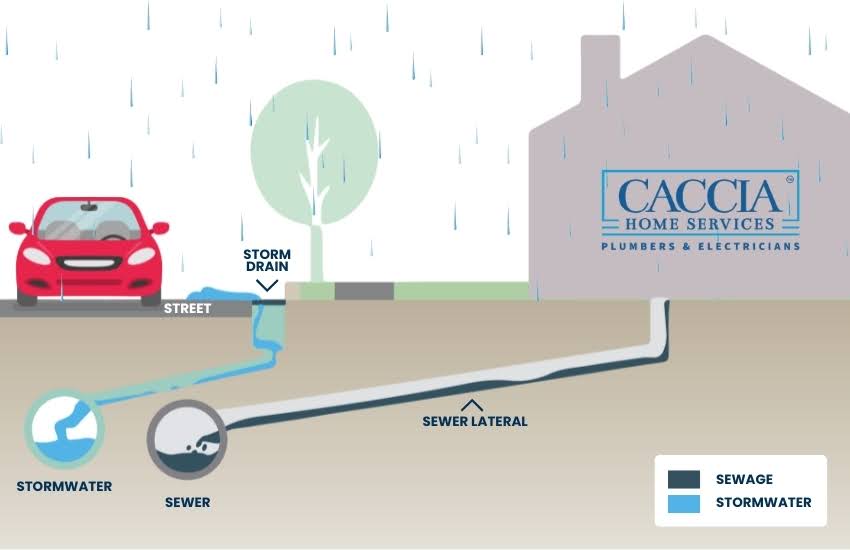
Sanitary sewer systems transport wastewater from homes and businesses to treatment facilities. This is the most common type of system in the Bay Area and includes a miles-long network of underground pipes, manholes/access points, and pumping stations that remove sewage safely and efficiently.
These systems are specifically designed to handle:
- Human waste
- Toilet paper and biodegradable solids
- Routine household wastewater from washers and drains
Wastewater flows from the smaller pipes in your home into your lateral, then spills into the main sewer line under the street. After that, it’s carried along to a local treatment plant, then released back into the Bay.
Stormwater and other sources of runoff are handled through an entirely different system.
Storm Sewer System
Storm sewers, also known as surface or runoff sewers, collect and transport rainwater, snowmelt, and irrigation runoff from storm drains in parking lots, roadways, and gutters. What comes in is transported straight into our local rivers, lakes, and other bodies of water.
Unlike sanitary sewers:
- Stormwater isn’t treated or processed in any way
- The system isn’t designed to handle bulky solids and other waste
- Drain points can sometimes overflow if they become blocked with leaves or trash
Contaminated stormwater can harm the local environment and our watersheds. This is why dumping debris, grease, or waste into storm drains is prohibited in most of California.
Combined Sewer Systems
Combined sewer systems carry both sewage and stormwater to outputs like treatment facilities and local rivers via a series of interconnected pipes. Each source enters the system from a different point, but temporarily merges into the same channel.
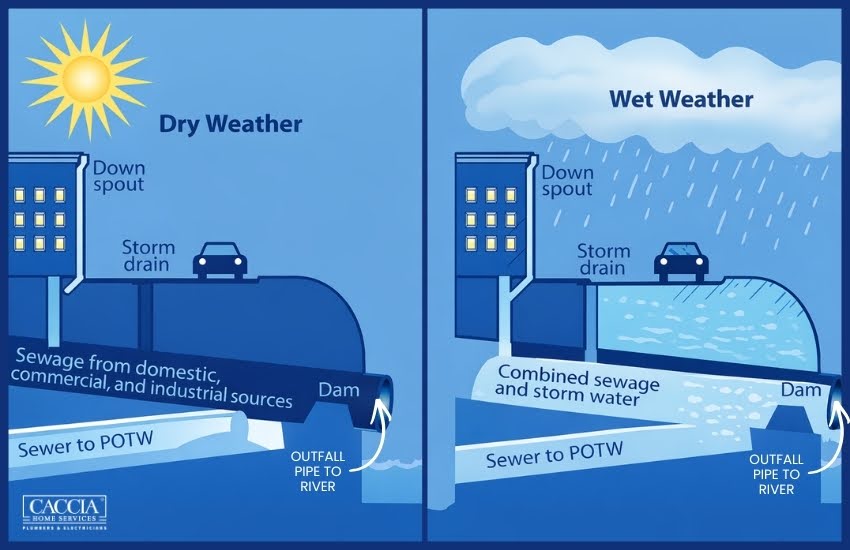
In a perfect world:
- Stormwater flows into the main channel first
- Wastewater enters the system next and gets carried along with it
- At set points in the system, wastewater splits off into another pipe
- Stormwater continues on in the main channel to local waterways
- Wastewater continues on to a treatment facility before being released
Unfortunately, that isn’t always what happens. In storms or floods, the volume of stormwater can increase dramatically very quickly, overwhelming the system so badly that sewage never splits off as it should. It ends up discharged into the local environment instead.
San Francisco is the only local area that still has these hybridized systems in place. The rest of the peninsula has upgraded infrastructure that keeps wastewater and stormwater separate.
How to Tell If You Have a Clog Somewhere in the Line
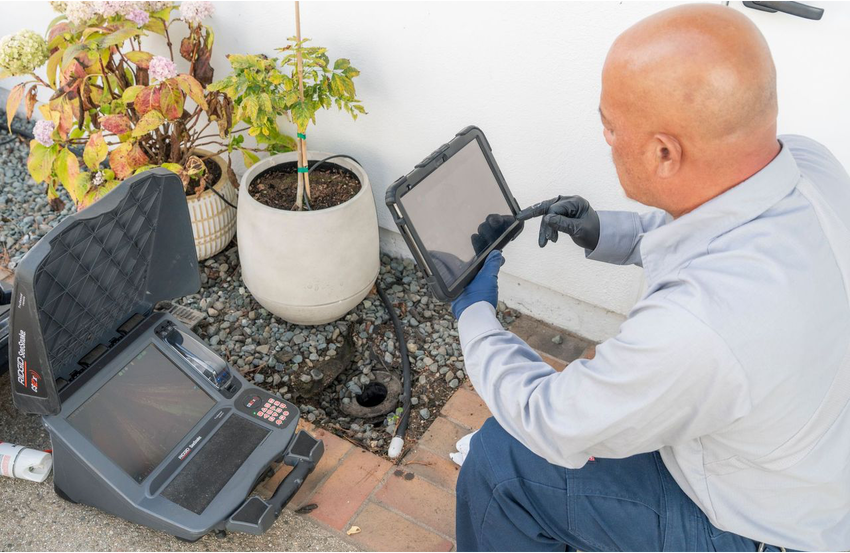
Clogs can happen in your sewer lateral or in the main line, and it isn’t always easy to tell which one you’re dealing with on your own. That’s why we recommend starting with a camera inspection. It’s the easiest way for us to visualize your line from your home to your street without digging.
Clogs in Main City Lines
Main line clogs are relatively rare because of the sheer size of the line itself. When they do occur, they tend to affect more than one person or property at the same time.
Blockages like these can cause widespread damage:
- Sewage may back up or flood into every house on the street
- All of the drains in your home may be slow or make loud gurgling noises
- A bad odor that smells like sulfur, decay, or feces
- Overflowing cleanout and/or access points
When the problem is deeper in the line like this, nothing you do on your own property will help. You and your neighbors will continue to see the same symptoms until the city sends someone out to fix it.
If you have any reason to suspect this might be your problem, call us right away for help at (650) 294-8622. We can have someone come out to confirm the blockage isn’t on your property, and if necessary, coordinate with Public Works to get it solved.
Clogs in Your Sewer Lateral
Lateral clogs happen at some point between your home and the street, and the worse they get, the more expensive they are to fix. As a reminder, this is the section of the line you’re responsible for, so the best way to resolve any problems is to call Caccia Home Services.
The symptoms are similar to a city line clog:
- Sewage backing up into your bathtub, toilet, sink, or shower
- Slow drains, usually across your entire home
- Loud gurgling noises in drains or when you flush
The main difference is that a lateral clog won’t usually affect anyone else but you unless you live in a multi-unit building or share your lateral with a neighbor. Problems like these are often caused by tree roots invading the line and creating a “net” that traps waste and toilet paper.
Sewer lateral clogs are not the same as drain clogs, which typically only affect one drain.
Tips For Clearing the Line
Never try to snake or clear a sewer line clog on your own. Depending on the cause, you might make the problem worse or even cause serious damage. Raw sewage is also stinky, hazardous to your health, and just generally disgusting to deal with, so send us a message and let us handle it instead!
Your job as a homeowner is to take action to limit the damage until help arrives.
What You Can Do at Home
Stop using the water as soon as you notice or suspect a clog. Less water coming in means less water trying to escape into the blocked line.
Your next steps will depend on the severity of the problem.
If sewage is actively backing up:
- Shut off your main water completely if you can.
- Close any doors to the area to prevent it from spreading further.
- Try to increase ventilation by opening any nearby windows if you can.
- Don’t allow children, pets, or people to touch or walk through the sewage.
- If the odor is very strong, get everyone out of the house completely and call for help.
It’s really tough to watch this happen in real-time, especially when the backup is creeping close to expensive appliances, your furniture, and other belongings. While it can be tempting to wade in and try to save them, it isn’t wise because sewage can make you very sick.
For all other symptoms, just stop using the water and send us a message to get help. Don’t put any chemicals down the drain or try to plunge them as it may make the problem worse.
How to Prevent Sewer Line Clogs
Good habits at home reduce your risk for clogs and broken or collapsed pipes in your own lines, but they also help preserve the health of the entire sewer system itself. Keeping your lateral in good condition and being responsible about what goes down the drain is an important part of being a good neighbor!
To make a positive contribution, follow these tips.
In the Bathroom:
- Never flush anything other than bodily waste or toilet paper.
- Wipes, paper towels, sanitary napkins, and toys (parents, we get it) won’t break down.
- Don’t use chemical cleaners like Drain-O as they can damage your drains.
- Install a hair/debris catcher in your shower and tub drains.
- Try to avoid rinsing hair down the drain when you’re shaving.
In the Kitchen:
- Keep fats, oils, and grease (FOGs) out of the drain.
- Let grease cool and dispose of it in the trash instead.
- Remember that anything that goes through your garbage disposal also ends up in the drain.
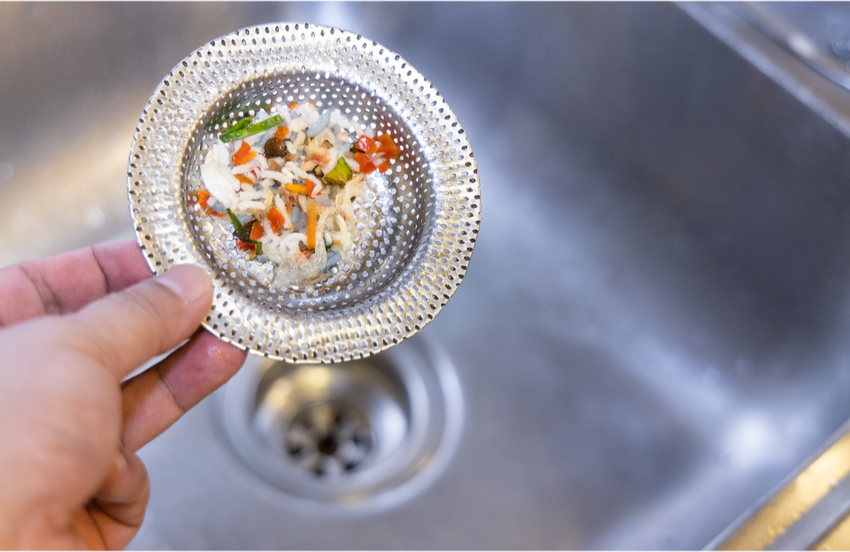
- Use a debris catcher in the drain to catch food if you hand-wash your dishes.
Everywhere Else:
- Avoid dumping lint, mop water, paint rinse water, or debris into your floor drains.
- Try to remove bulky debris, like chunks of mud, from clothing before you wash them.
- Plant trees at least 10-20 feet away from your sewer lines to keep roots out of the line.
The number one way you can reduce your risk for clogs and costly repairs is to schedule annual plumbing inspections. Hydrojetting is the best way to remove tree roots and clogs safely, but having your line cleared out every few years will also lower your risk for blockages in the first place.

When Clogs Strike, Call Your Neighbors At Caccia For Help
Sewer line problems are messy and stressful, but you don’t have to face them alone. Whether you’re dealing with slow drains, clogs, or backups, your neighbors at Caccia Home Services are always here to help. Our licensed plumbers have the knowledge and experience to clear the line fast.
Don’t put off addressing the symptoms of a clog until it’s too late. Send us a message and let us take care of it for you so you can get back to enjoying your home and your systems!