Skip to content
  (650) 442-1470

 (650) 442-1470
Summary:
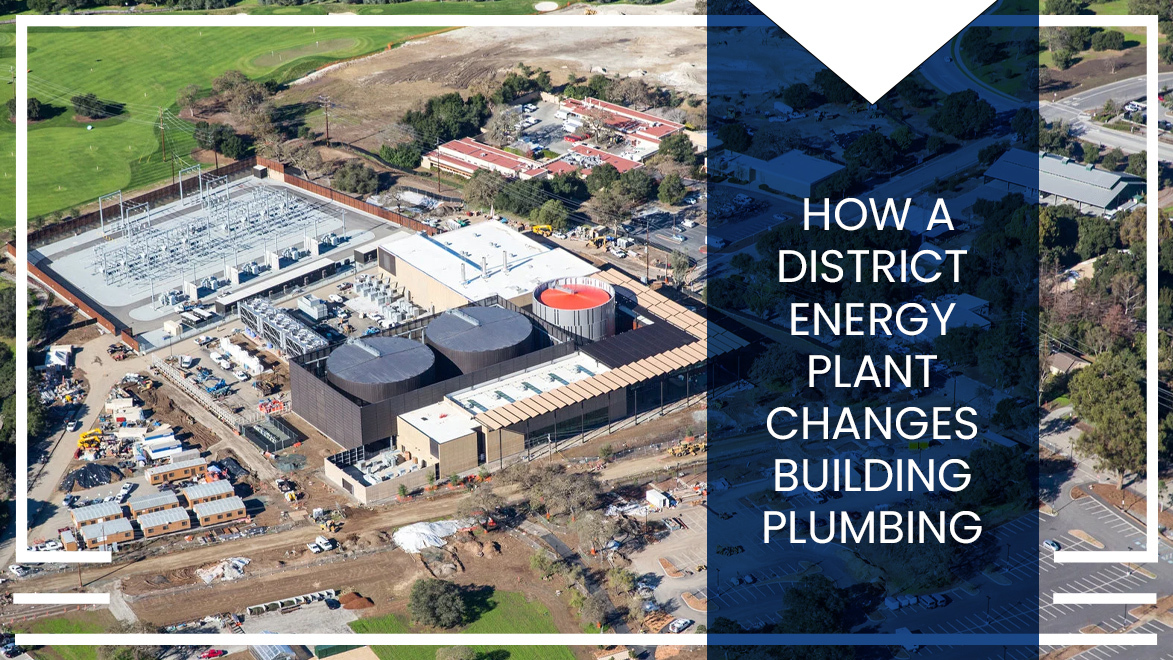
Stanford’s innovative district energy plant changes building plumbing by shifting heating and cooling production from individual buildings to a single Central Energy Facility (CEF). The CEF distributes 42°F chilled water and 160 to 170°F hot water to the entire campus through more than 20 miles of underground piping. Special equipment like heat recovery chillers, hot water generators, and storage tanks help address spikes in demand and improve overall efficiency while also reducing water waste.
| Time to Read | 6-8 minutes |
| What You’ll Learn |
|
| Next Steps |
|
How Stanford’s District Energy System Changes Building Plumbing
Stanford University has come a long way since it was first founded almost 150 years ago in what is now the heart of Silicon Valley. Today, it’s considered a top-tier school with an impressive array of programs across many different disciplines, as well as one of California’s most important intellectual hubs.
It’s also an institution with a longstanding history of innovation on campus. One of the boldest examples came in 2015, when the Stanford Energy System Innovations (SESI) program’s new Central Energy Facility (CEF) officially came online.
The CEF supplies campus buildings with heating and cooling through a complex system of heat recovery chillers, pumps, and underground piping. In this guide, you’ll get an inside peek at how it all works and learn how it fundamentally changes the approach to building plumbing from the ground up.
How District Energy Systems Like the CEF Work
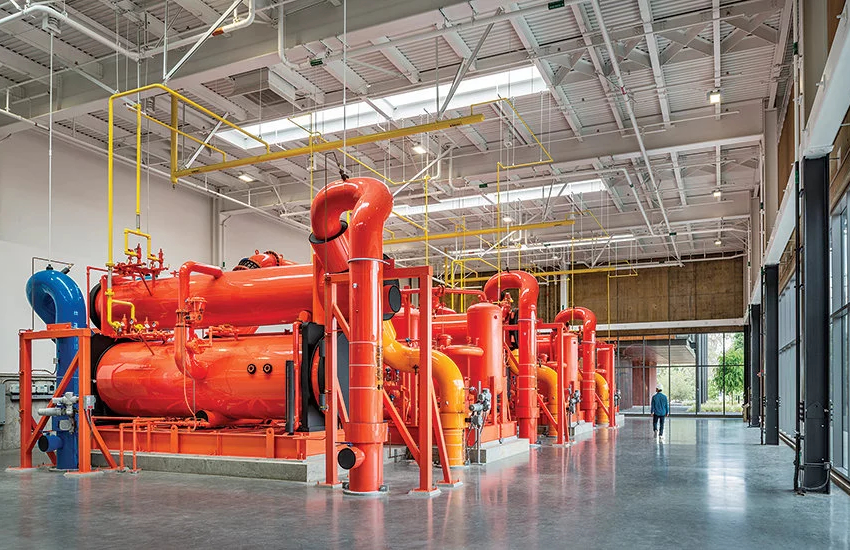
A district energy system produces heating and cooling in one central location and distributes it to multiple buildings through a shared underground network. In this context, “district” just refers to the defined area of coverage and everything in it. It doesn’t have anything to do with zoning or municipal boundaries.
The CEF produces heating and cooling in the form of hot and chilled water on-site, then distributes it as needed to meet demand.
At a basic level, that means:
- Buildings rely on the CEF instead of maintaining their own systems
- Chilled and heated water is carried across campus in separate pipes
- Each building connects to the loop through a dedicated laterals
Centralized production normally comes with a big tradeoff: multiple buildings can be negatively affected at the same time if something goes wrong at the plant. The CEF’s thermal storage tanks, extra pumps, and additional heat recovery chillers help keep the system stable through spikes and outages.
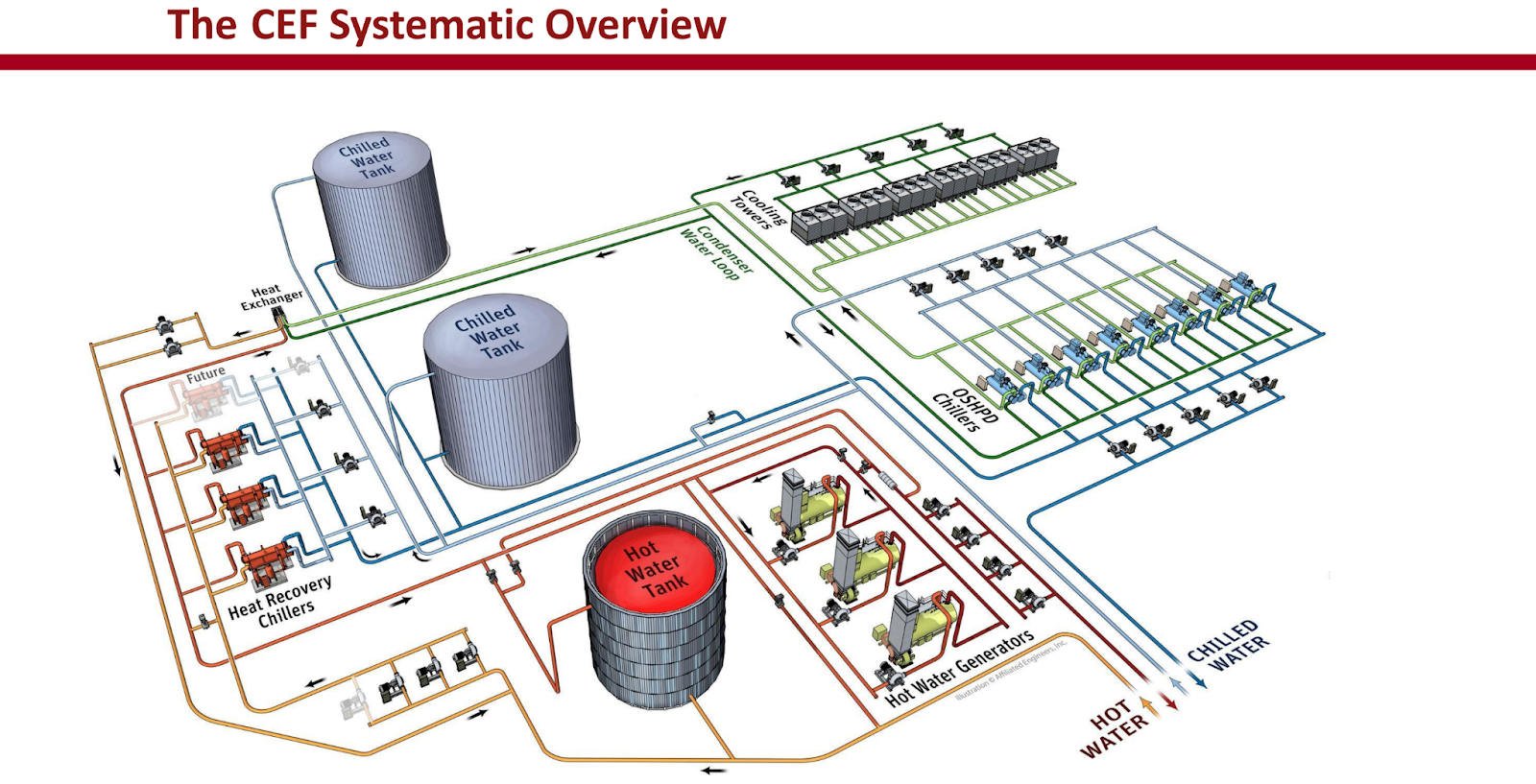
The Heating and Chilling Process, Step-by-Step
Take a look at the diagram above as you read through this section. It’s pulled directly from Stanford and shows exactly how each part of the system, including the water, chillers, storage tanks, and distribution loops, are connected and influence each other at each step.
Step 1: The Plant Powers Up and Brings In Water
The CEF draws electricity through Stanford’s high-voltage on-site substation, which ties into California’s wholesale power grid. That power keeps the heat recovery chillers, pumps, and controls running around the clock. Water is supplied by the SFPUC and mostly comes from the Hetch Hetchy reservoir.
Step 2: Heat Recovery Chillers Go To Work
Three heat recovery chillers (HRCs) provide up to 2,500 tons of cooling capacity each. A refrigeration cycle that includes a condenser loop, cooling towers, and OSHPD chillers, brings the water temperature down to approximately 42°F, then pushes it out across campus or into one of three storage tanks.
Step 3: Recapturing Waste Heat From the Chilling Process
Chilling water generates a lot of what’s known as “waste heat.” That energy is transferred into the hot water loop, where hot water generators raise the temperature to roughly 160–170°F. Heated water is either stored in a dedicated tank or used to meet the demand for heating across campus.
Step 4: Hot Water Cools and Cold Water Warms as It’s Distributed
Hot water slowly cools back down as it circulates. By the time it reaches the CEF again, it’s at temperatures as low as 130°F. Chilled water absorbs heat from buildings as it circulates through the system and re-enters the CEF at around 56–60°F.
Step 5: The Process Starts All Over Again
The HRCs detect the temperature of water coming back into the CEF. Once again, the refrigeration cycle creates more chilled water, while waste heat is used to bring hot water back up to temperature.
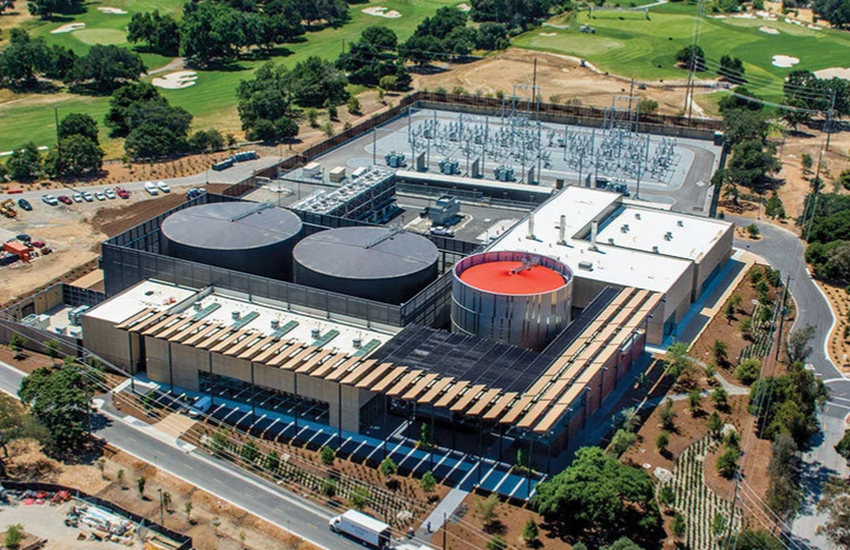
When Complex Infrastructure and Standard Plumbing Meet
We’ve been focusing a lot on temperature up to this point, but heating and cooling is really only one part of the equation. Designing, maintaining, and repairing all of the special equipment required in the CEF and in each of the buildings attached to it is a feat of engineering in its own right!
We’re talking about:
- More than 20 miles of underground piping
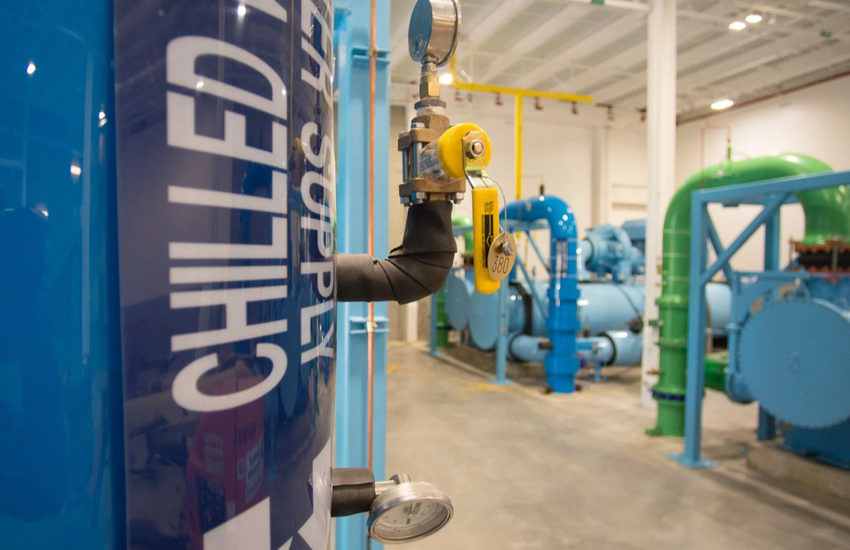
- Separate supply and return lines for both hot and chilled water
- Dedicated 4 to 6″ iron laterals with PVC branch connections serving each building
- Backflow preventers and pressure-reducing valves that help protect the system
- Two 4.3 million gallon cold water storage tanks
- One 2.3 million gallon hot water storage tank
Every connection point, valve, and section of pipe has to be installed and maintained with the bigger picture in mind. In a network this interconnected, work done in one location can affect everything from pressure to a building’s risk of catastrophic failure that can cost millions of dollars to fix.
Factoring in Other Plumbing Systems
The CEF facility and water distribution network is complicated, but it’s important to point out that it’s only one element of Stanford’s broader plumbing infrastructure.
It doesn’t account for:
- The sewer lines that carry away waste
- Thousands of toilets, sinks, tubs, and showers that get used daily
- Stanford’s four main swimming pools located in the Avery Aquatic Center
- Lab fixtures that are connected to incoming water lines or outgoing sewer lines
- Water filtration systems that help reduce the risk of germs and filter out contaminants
Plumbers who inspect and repair centralized systems must be able to understand how each spoke in the wheel works in conjunction with the core production facility itself. Teams like ours have the staff and resources to work around tight deadlines and downtime windows so the job affects as few people as possible.
Not every company or contractor will have the knowledge, skills, or resources to handle complex jobs like these at scale, and there’s no shame in that! Different jobs call for different levels of expertise.

Caccia Is Your Partner in Plumbing Innovation
Supporting Stanford’s future means understanding its infrastructure, and that always starts with education. That’s why we’re proud to bring you local spotlights like these that help you learn more about California’s most innovative plumbing systems and what it takes to manage them.
Caccia Home Services has the knowledge, skills, and experience to help you navigate even the most challenging or sprawling plumbing projects. To find out how we can help you design, install, or maintain large-scale systems, just send us a message.