 (650) 442-1470

 (650) 442-1470
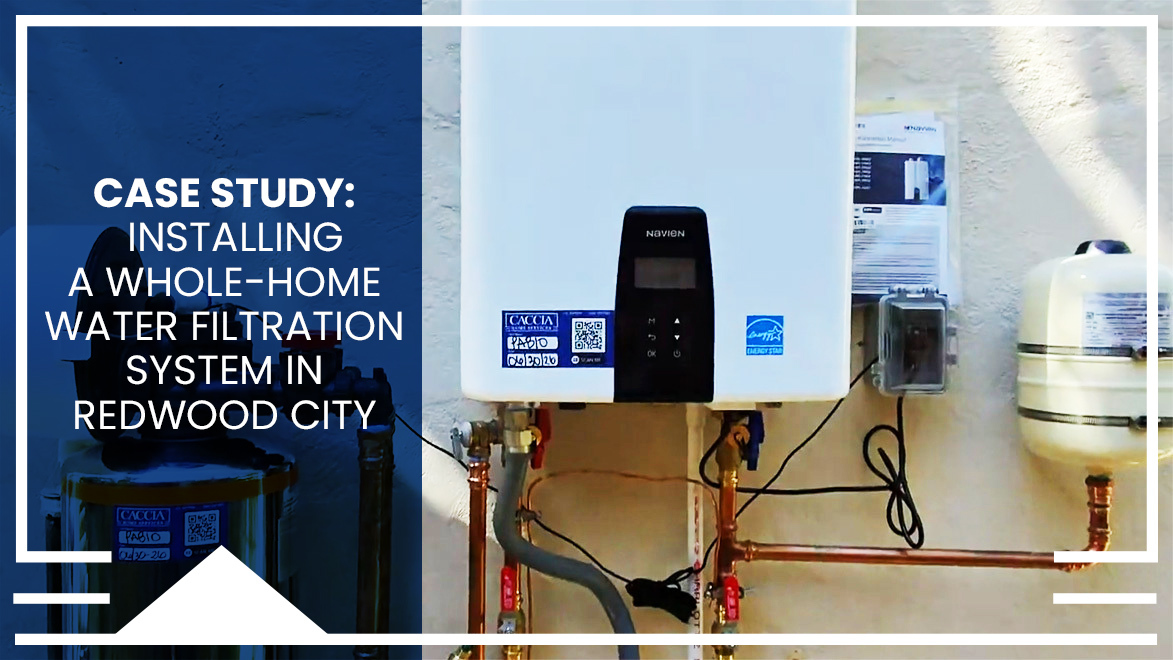
Field Report · Water Treatment & Filtration
Installing a Whole-Home Water Filtration System in Redwood City
Hard water and chlorine can spoil the taste of your water and even damage lines and appliances. One Redwood City homeowner called us in to fix it for good.
Client Type
Residential Homeowner
Location
Redwood City, CA
Service
Water Filtration & Tankless Water Heater
Equipment
Puronics Water Softener, Navien NPE-240A2, new GFCI
Outcome
All Installations Completed, Tested, and in Service
Not every Bay Area neighborhood struggles with water quality, but Redwood City is certainly one of them. The supply here is moderately hard, and while the minerals in it are safe to drink, they can sometimes lead to spots on glassware, scale buildup on pipes, or corrosion. Add in the chlorination that keeps drinking water safe, and it can taste off, too.
That’s why we weren’t surprised to hear from a residential customer in the area who wanted to install a whole-home water softener. Treating the water softens it significantly, but they also wanted to upgrade to a new tankless water heater.
Pablo was able to fulfill all of their requests and install a brand-new GFCI at the site right on the same service call.
Step 01 · Filtration
The Filtration System
A Puronics system with its own brine tank, built to last and to service easily.
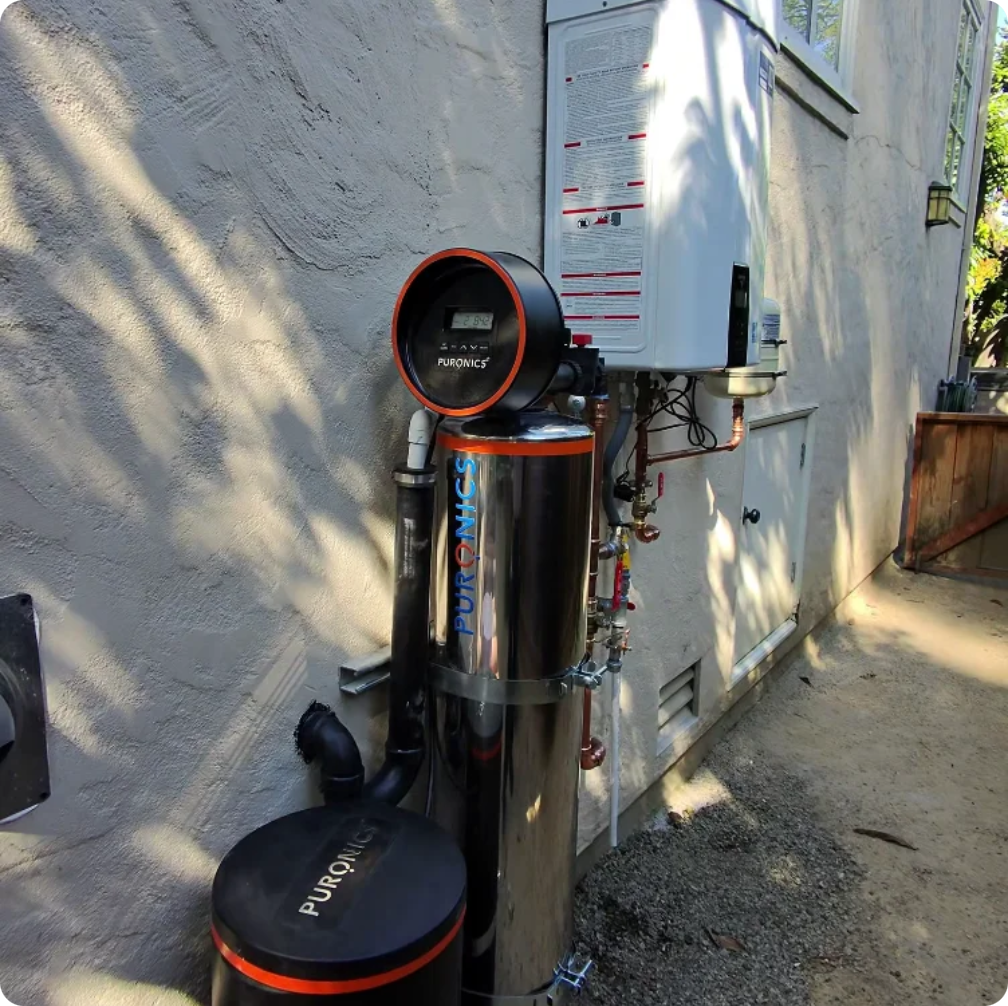
Puronics water softener with its stainless media tank and dedicated brine tank.
Pablo installed the Puronics water softener on the home’s main water line so every tap, shower, and appliance receives treated water at all times. He also installed a dedicated brine tank, which is what supplies the salt needed during the unit’s cleaning and recharge cycle.
He also pre-programmed the digital control valve for the home’s unique water conditions and usage. This is vital because it stops the softener from constantly regenerating, which can waste salt.
Puronics Whole-Home Systems will also automatically filter out chlorine taste and that tell-tale “city water” odor. Special bacteria-resistant materials, like high-flow resin, pull all of these out without a meaningful reduction in water pressure along the way.
The service ports and bypass valve on this unit also make it very easy to service in the future. A technician like Pablo can typically drop by and take care of any requests without having to cut into pipes, or worse, into your exterior wall.
Step 02 · Hot Water
The Tankless Water Heater
A Navien NPE-240A2 high-efficiency unit, fed by the newly treated supply.
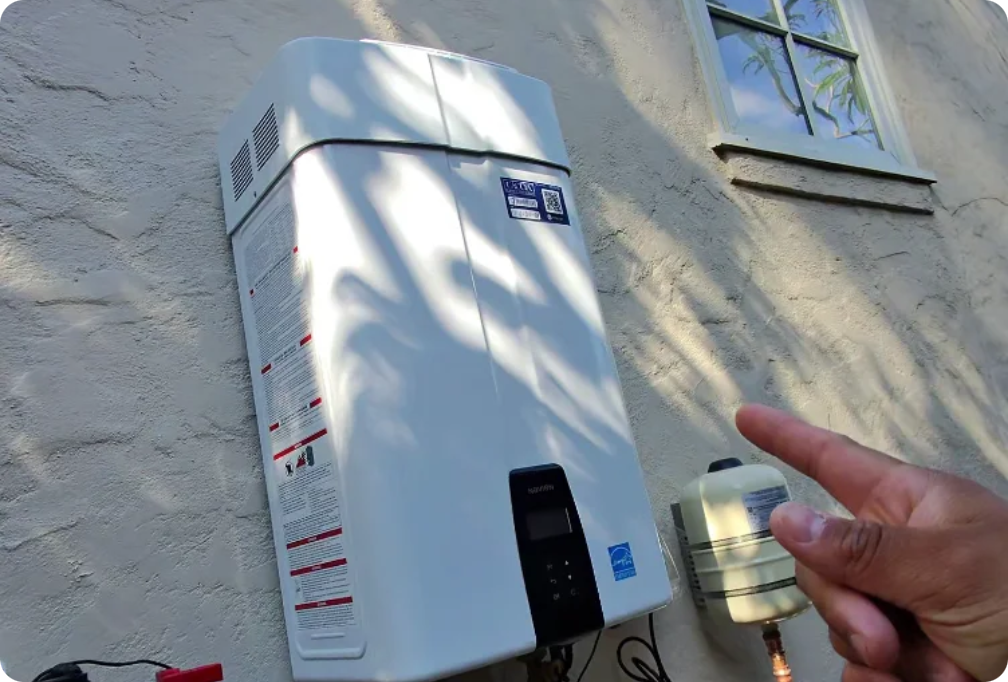
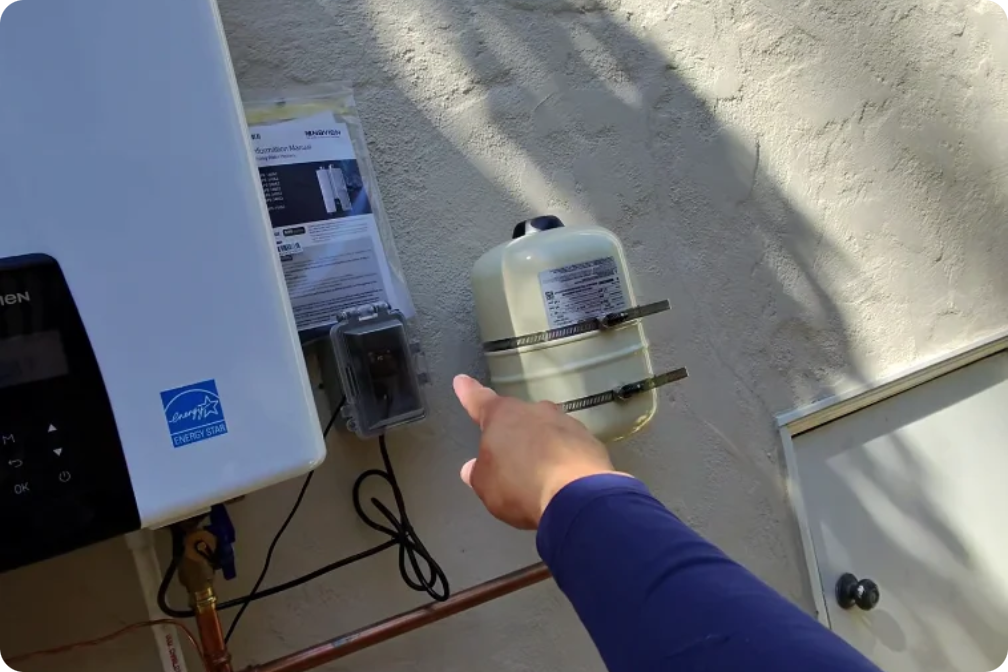
Navien NPE-240A2 high-efficiency tankless water heater mounted on the exterior wall with a cream expansion tank and new copper supply lines.
The customer’s top choice for a water heater was the Navien NPE-240A2. This is a great little high-efficiency device that heats water on demand without the need for a bulky tank. Because it isn’t keeping a full tank hot around the clock, there’s no standby heat loss, so it costs less to run, lasts longer, and is just generally better for residential homes.
Going tankless also has another benefit: the code requirements for the amount of space under and around it are much, much smaller. If you don’t have much room to work with, it’s the best way to go.
Tankless water heaters like the Navien NPE-240A2 can run without expansion tanks just fine, but they are recommended in certain conditions. Pablo installed this one just to the right of it.
Why You Might Need an Expansion Tank
Step 03 · Commissioning
The Initial Carbon Media Backwash
The step most homeowners never see — the system should always be flushed before the water filter or softener goes into service.
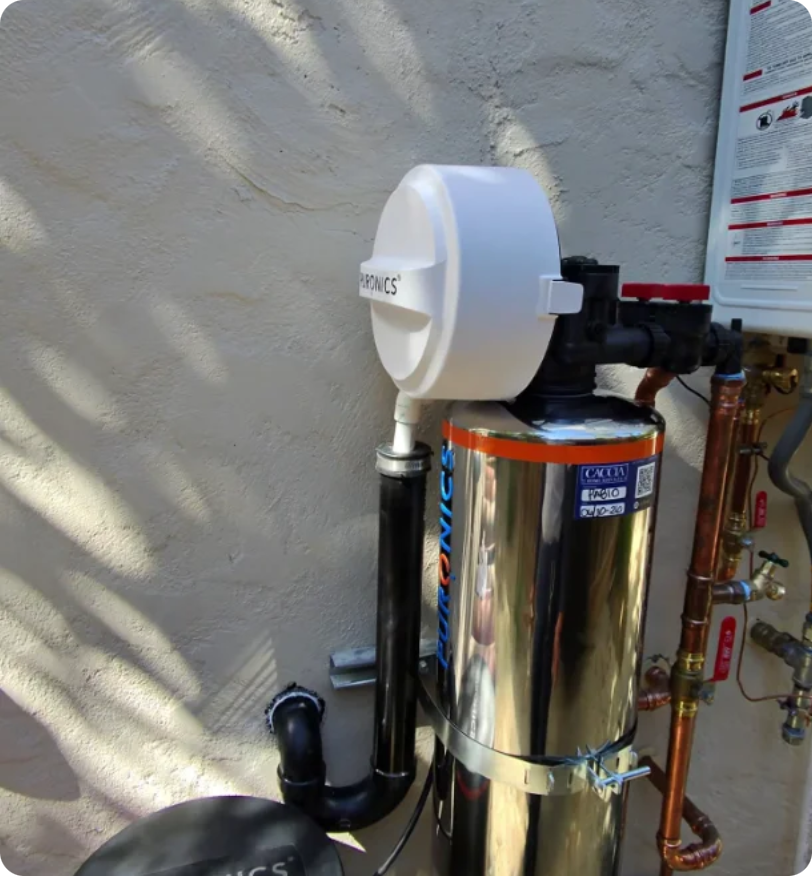
Caccia technician switching the Puronics iGen control valve into bypass before the initial backwash.
Most water filters or softeners are already packed with fresh carbon and other filtering materials when they arrive at the home. There’s no need to add them during the install, but they can release dust or sediment on the first run.
These materials should never make it into your home, so the first step after installation is always to run a backwash cycle.
The Puronics iGen system’s built-in bypass valve is designed to make this easier for plumbers. The technician carefully turned off the line running into the home and opened up the bypass first, then allowed the cycle to run.
It’s a quick step most homeowners never even know happens, but skipping it is how carbon dust ends up in your faucets and appliances. Taking the time to flush it first is what keeps your plumbing clean from day one.
With the backwash complete and the system in service, Pablo fitted the Puronics waterproof cover over the control head, shielding the electronics and valve programming from splash, condensation, and dust.
Step 04 · To Code
Electrical and Code Work
A vital step for protecting your household and equipment from electric shock and fire where power meets water.
New GFCI outlet in a weatherproof enclosure, installed to code for the system’s power supply.
Our technician also installed a new ground fault circuit interrupter (GFCI) outlet to power the system. Local code requires a GFCI outlet anywhere electricity sits close to water. They protect your equipment and home from shocks by shutting off the power the instant a fault is detected.
We also secured the required permits before beginning any work. This critical step reduces hassle for homeowners and delivers the peace of mind that comes with a job well done.
It’s just one of the many ways Caccia is working harder to serve residential customers in the Bay Area.
Keeping It Running
A Simple Maintenance Rhythm
Water filtration systems and tankless heaters do need occasional maintenance after they’re put in. Follow this schedule to keep them healthy.
Every few weeks
Check the Salt Level
Check the brine tank every so often and top up the salt according to the manufacturer’s instructions. Or, let us handle it for you so you never have to worry again.
Twice a year
Rinse the Brine Tank
Salt bridging or residue in the tank can interfere with filtration. If the salt looks crusted over or the level hasn’t dropped in weeks, it’s probably time for a rinse.
Every year
Schedule a Visit
A yearly visit to sanitize the softener and descale the tankless heater keeps both devices healthy. Professional attention is also the best way to preserve the warranty.
Every 8–12 years
Refresh the Media
Over time, the carbon and resin media in your softener can become clogged or just stop filtering water as effectively. The fix is simple: have the filters replaced.
0
debris in household plumbing lines
2
systems installed and commissioned
In Service
and delivering clean, clear water to the home
Quality Service You Can Trust
Once the backwash cycle finished, all new equipment was officially ready to go into service. The homeowner’s entire home and family now benefits from having direct access to soft, filtered water at every tap.
At Caccia, we always take the time to install and commission each new device correctly without taking shortcuts. Our main goal is to help you get years out of your new equipment with fewer service calls later on.
Support agent Veitoa is standing by to take your call.


