(650) 442-1470

 (650) 442-1470

A Tankless Water Heater Flush in Redwood City
Mineral buildup can gradually reduce the performance of a tankless water heater and put the heat exchanger at risk. One Bay Area homeowner called Caccia to flush their unit and find out what condition the rest of the plumbing system was in.
The technician isolated the water heater and circulated a certified descaling solution through the heat exchanger for up to an hour. Once the scale had dissolved, he flushed the unit clean and checked the home’s water pressure, emergency shutoff, and nearby fixtures for any other issues.
By the end of the service call, the homeowner had full access to hot water again, a documented plumbing baseline, and clear recommendations for preventing future scale buildup. Those options included regular maintenance and longer-term solutions such as a whole-home water softener.
WHY IS TANKLESS WATER HEATER DESCALING SO IMPORTANT?
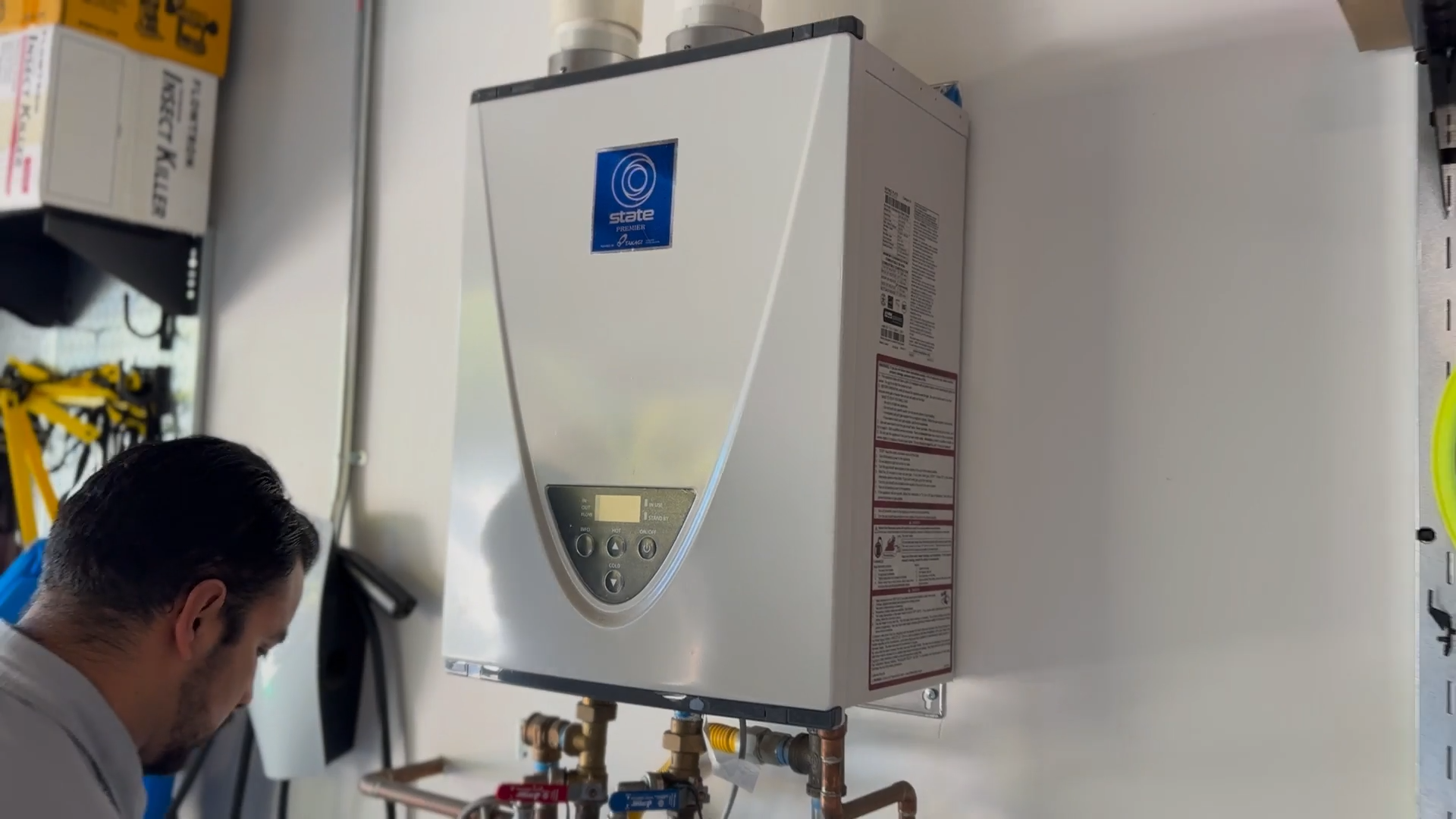
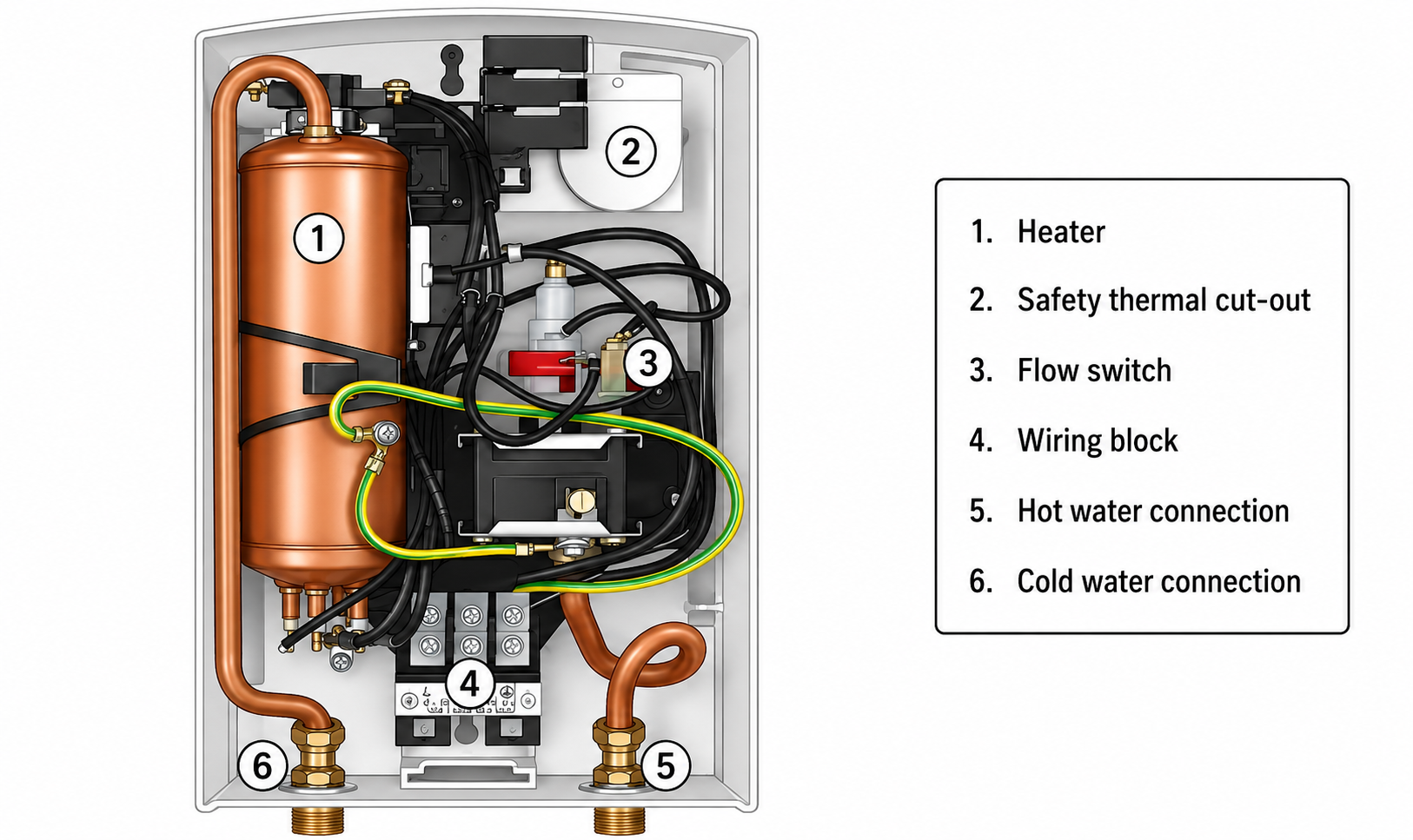
Tankless water heaters save energy by heating water on demand, which is much more efficient than trying to maintain the temperature in a 40-50 gallon tank all day. Cold water comes in through the intake line and travels through a special copper heater that brings up the temperature in seconds every time you activate a faucet, fixture, or appliance.
Hard water contains minerals like calcium and magnesium. When water flashes to a high temperature of around 140 Fahrenheit, these minerals bake down onto the internal copper walls of the heat exchanger inside.
That’s a problem.
Mineral scale acts like a thermal blanket that forces the system to work twice as hard to heat up the water, which drastically lowers energy efficiency. It can also create hot spots that erode and crack the walls of the heat exchanger, which will cause the water heater to fail.
Yearly flushes are a mandatory requirement under most manufacturer warranties. Skipping this essential maintenance step could stop you from filing a successful claim later on.
01. Isolating the System
Flushing a leaking unit will just result in a mess, so the first step was to isolate the water heater from the rest of the system.
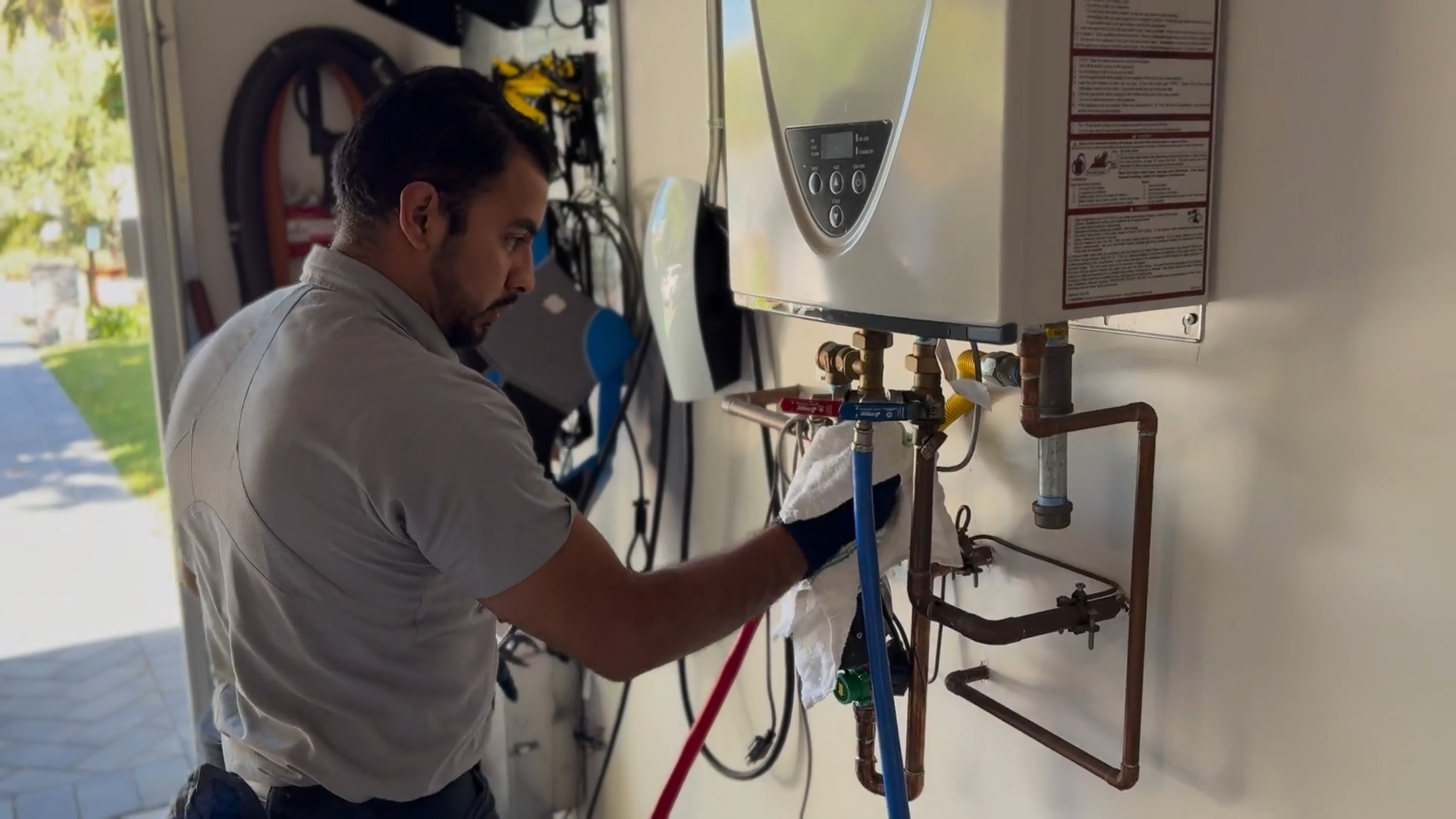
Cristian’s first step was to shut down the gas and electric supply to the customer’s tankless water heater, then close the built-in isolation service valves to cut the unit off from the rest of the home’s plumbing. This is an essential step for preventing injuries during the flush!
A quick check of every attached valve and fitting let him double-check that there were no signs of a leak, like wet surfaces or small drips. Catching a bad seal here means the flush stays contained to a bucket and a couple of hoses without soaking the customer’s floor.
Next, he connected a pair of high-pressure rubber hoses to the service ports on those isolation valves, one on the cold-water side and one on the hot. He hooked the other end of each hose up to a specialized submersible descaling pump sitting inside a circulation bucket filled with non-toxic descaling solution.
The visible portion of the drain only tells part of the story. Rather than guess at the cause, Jacob’s plan was to send the camera down the line to locate the blockage directly and possibly break it up.
The first step was to properly set up the work area so any wastewater couldn’t spread further into the clinic. Containment is critical for infection control in veterinary hospitals and other medical settings, so it should never be skipped.
02. Circulating the Descaler
Patience matters more than pressure here: a slow soak breaks down scale that a hard blast would just push around.
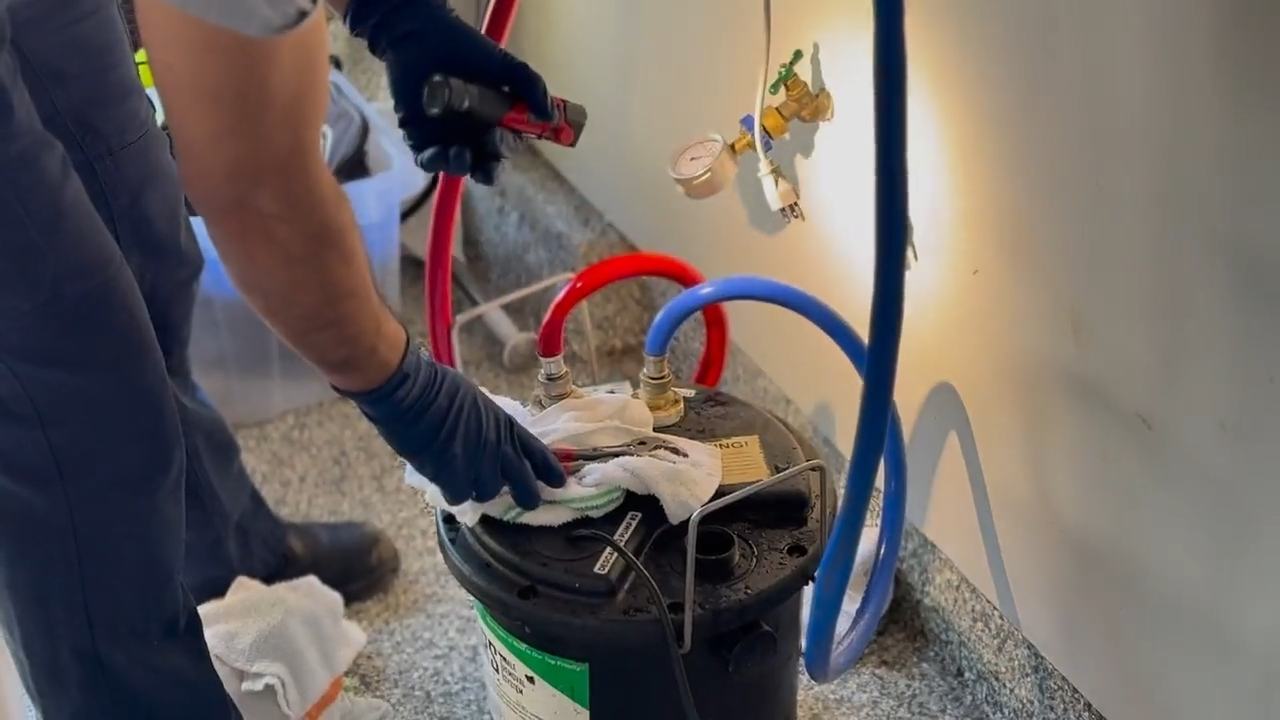
With the hoses connected and the water heater properly isolated, Cristian switched on the pump. The descaling solution started circulating through the internal matrix of the heat exchanger right away.
The cycle has to run continuously for 20 to 60 minutes to break down and dissolve rock-hard calcium deposits without scratching or damaging the internal copper plumbing. For this client, it finished in a little under an hour.
Cristian monitored the water heater and inspected the surrounding fixtures for any signs of wear, leaks, or other issues while the solution circulated. This allowed him to go the extra mile for the customer by identifying potential problems while the system was already out of service.
Have questions about your water heater? This is a good point in the service call to ask.
The visible portion of the drain only tells part of the story. Rather than guess at the cause, Jacob’s plan was to send the camera down the line to locate the blockage directly and possibly break it up.
The first step was to properly set up the work area so any wastewater couldn’t spread further into the clinic. Containment is critical for infection control in veterinary hospitals and other medical settings, so it should never be skipped.
03. Clearing the Line and Testing the Fix
The real test isn’t the flush itself, it’s whether the unit fires cleanly once everything’s back together.
Once the circulation cycle finished, Cristian shut off the pump and flushed the heat exchanger with fresh water to clear out any dissolved scale and leftover solution. He also removed and rinsed the inline cold-water filter screen to clear out sediment caught within it during the cycle, then reopened the isolation valves.
After restoring the power, he tested the unit by running the hot water at a nearby fixture for several minutes. Confirming that the water heater fires cleanly and holds a steady temperature is vital.
One successful test, another year of reliable service.
04. The Whole-Home Vitals Check
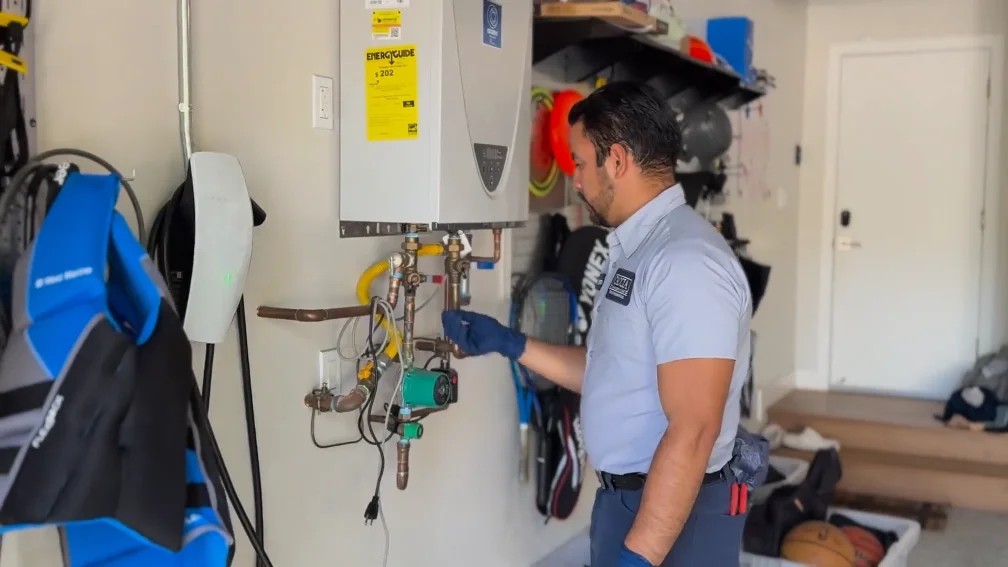
With the descaling process over, Cristian turned his attention to the rest of the customer’s system.
Tankless water heaters don’t operate in a vacuum. They’re tightly integrated with every other component and appliance in the home. Even a minor issue with water pressure, the gas supply line, or local water quality can interfere with how it performs or cause it to fail completely.
With that in mind, Cristian inspected the fixtures and pipes further out from the unit for early signs of hard water damage. Then, he methodically tested the incoming water pressure and confirmed the status of the emergency shut-off valve.
Checks like these help homeowners better understand the health of their plumbing and spot issues before they cause costly damage later on. Early intervention reduces both the price of repairs and the risk of a flood or leak.
05. Consulting on a Permanent Fix
A professional descaling cycle solves hard water build-up for now, but it won’t stop the next layer from forming.
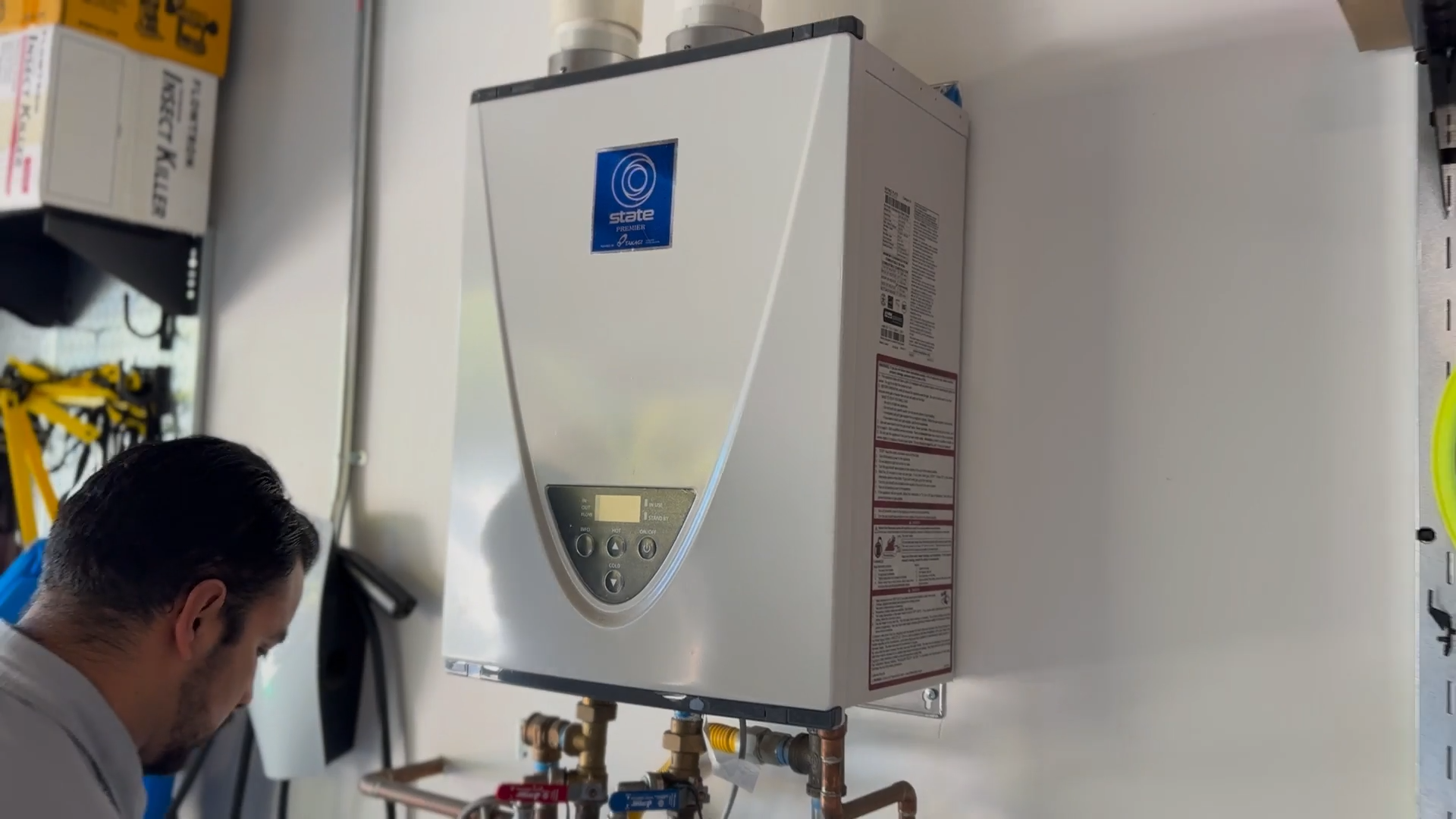
Before packing up, Cristian cleaned up the worksite, then called the homeowner in to walk them through the results. The volume of discolored water and sediment in the bucket served as evidence that their plumbing systems were at risk for further damage.
Shifting the conversation toward prevention, he asked the homeowner if they wanted to explore a more permanent fix. Since the answer was yes, he walked them through the two structural upgrades our plumbers recommend prioritizing first:
1. Install a Whole-Home Water Softener
Strips calcium and magnesium out of the water at the point of intake, reducing the risk of scale build-up, hard water spots, and soap scum across all pipes, fixtures, and appliances.
BEST FOR: Long-term, whole-home protection.
2. Add Scale-Inhibiting Filtration
Conditions calcium and magnesium without removing them from the water so they’re less likely to bond to pipes, fixtures, and appliances. May be easier to install and manage.
BEST FOR: Simple, straightforward protection.
60
minutes to descale a tankless water heater
1
visit to confirm it’s working for another year
Restored
heat transfer efficiency and water pressure
Restored Today, With a Smarter Maintenance Plan for Tomorrow
Clearing out all mineral sediment instantly restored maximum heat transfer efficiency and water pressure. By the end of the service call, the homeowner had full access to reliable hot water and the documentation they need to prove a licensed plumber performed the work.
That’s the value of pairing precise technical knowledge with thorough diagnostics and practical homeowner education.
Our number one goal is to preserve function and peace of mind for all Bay Area homeowners.