 (650) 442-1470

 (650) 442-1470
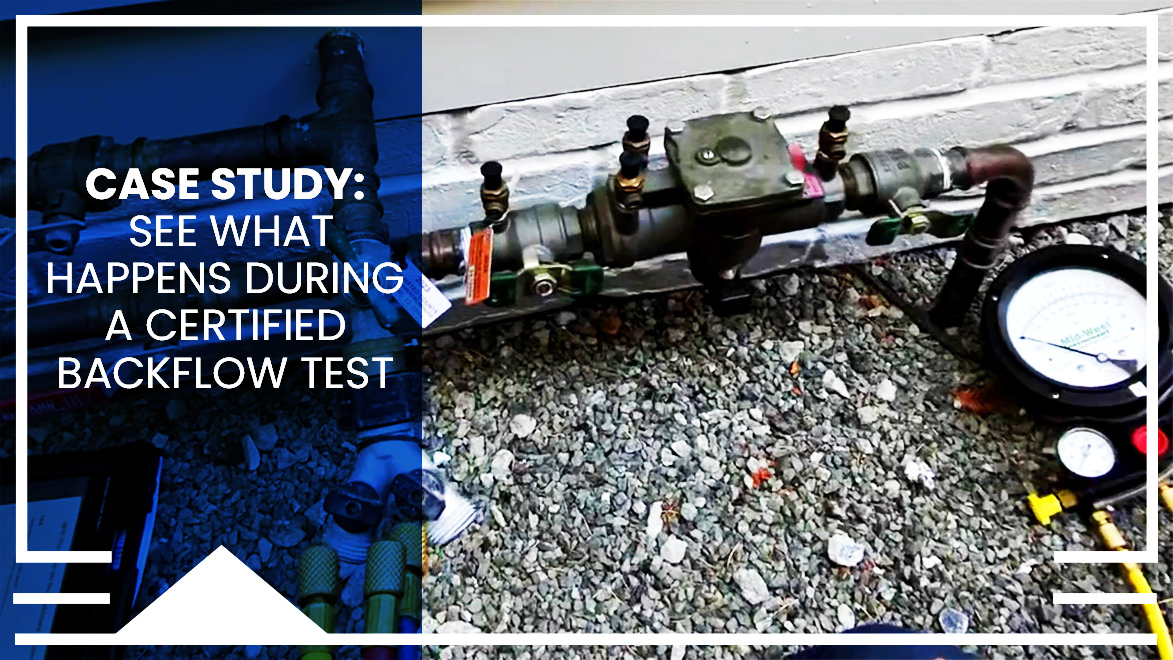
Field Report · Backflow Testing & Certification
See What Happens After a Certified Backflow Test
A local company called us in for a backflow test. What our technician discovered was more worrisome: a compliance gap that could have cost them thousands of dollars in fines if the local water purveyor found out.
Client Type
Commercial
Service
Certified Backflow Preventer Test
Assembly
Watts LF009M2QT Backflow Preventer
Equipment
Midwest Model 845 5-Valve Kit
Outcome
Test Passed and Compliance Restored
Backflow Testing is Mandatory in Every Bay Area Water District
Backflow preventers stop contaminated water from being pulled or pushed back into the public drinking supply. A pressure drop in the main or sudden increase in downstream pressure can siphon water backward and force it into the local drinking water supply.
Every retail agency that provides water across the Peninsula and South Bay makes it mandatory for businesses to have their backflow preventers tested at least once per year. Our Certified Testers work directly with them all every day.
Water agencies requiring annual testing
2 counties · 21 agencies
San Mateo County — 13 agencies
Santa Clara County — 8 agencies
Plus the California Water Service, which serves communities across all counties.
21
Agencies
2
Counties
1
Call to handle it all
Step 01 · Records
Reviewing the Test History
Documentation must be fully reviewed and updated during the call.
A lapsed test is a compliance concern, and it can lead to trouble with the local water purveyor because it tells them the assembly’s condition went unverified for an extended period. Flagging it on the call gave the customer the ability to correct it first.
Yearly tests are mandatory, not optional. They must be completed and filed on time by a certified tester using a calibrated gauge. If the unit fails and causes an issue, the business could be exposed to fines or even lawsuits.
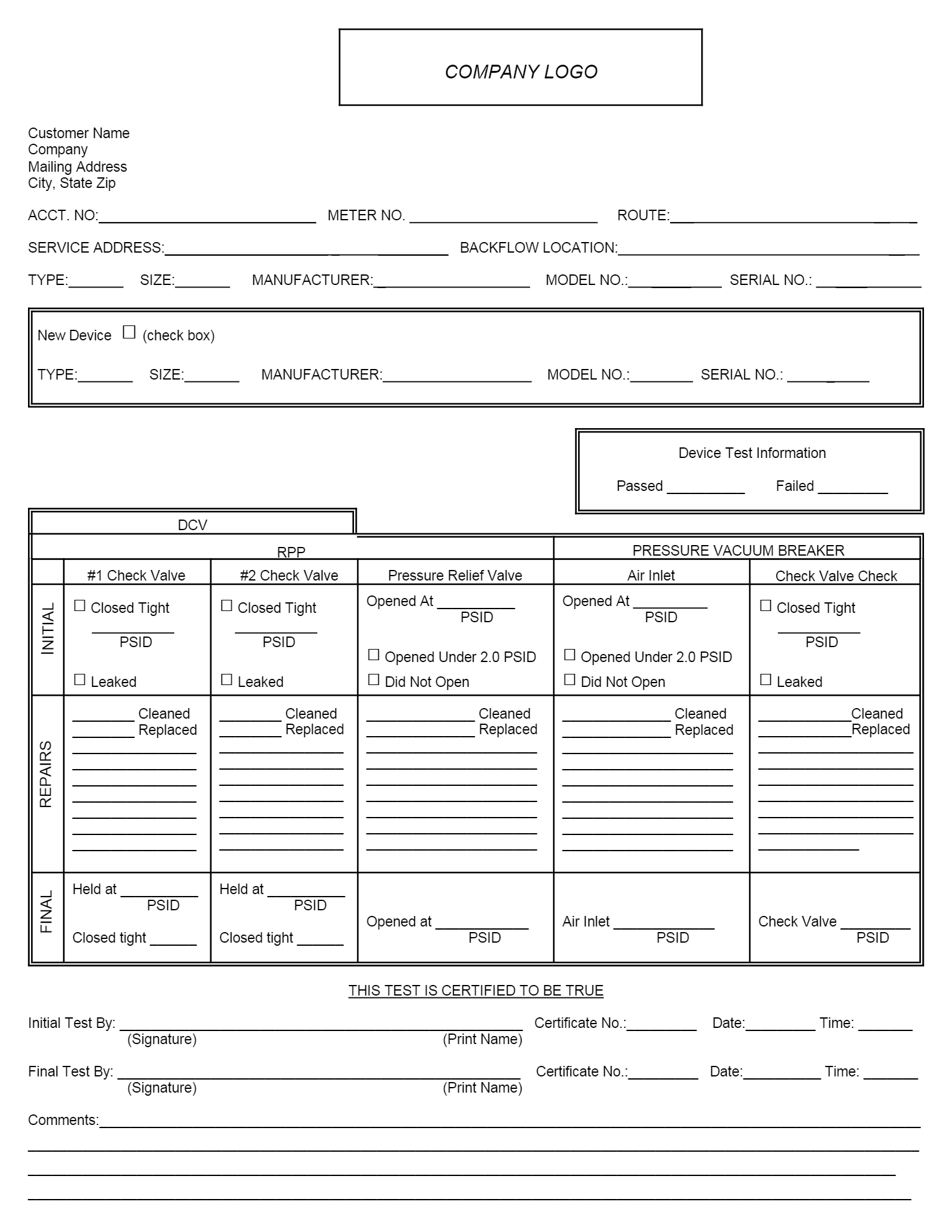
The official Alameda County test-report form our Certified Testers complete and file for every assembly. Every reading, repair, and signature is recorded here.
What an overdue test could cost you
San Francisco
Fines up to $1,000 per violation, per day; water shutoff possible.
EBMUD
$784 shutoff and restoration charge; service discontinued.
Menlo Park
$130 penalty, plus $313/hr if the city tests it for you.
Hayward
$150 meter lock + $117 restoration + $70 per visit.
Marin Water
Escalating notices ending in termination of water service.
Santa Rosa
30-day grace, then water is turned off until it passes.
*Figures reflect each agency’s published fee schedule and may change.
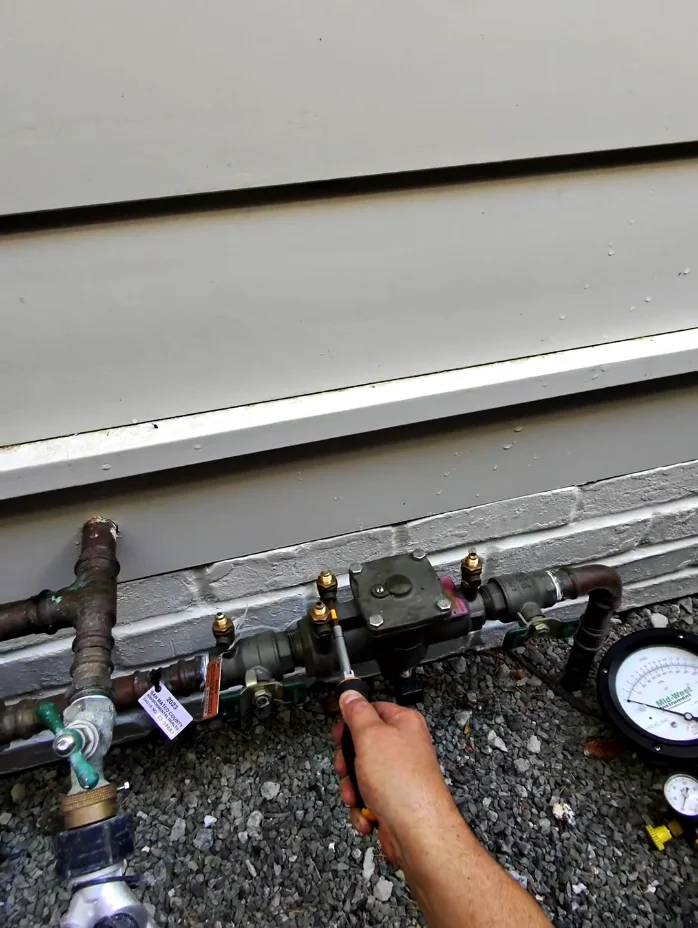
Watts LF009M2QT reduced pressure zone assembly before testing, with shutoff valves closed.
Step 02 · Isolation
Valve Checks and Shutoff
Before a single reading is taken, the gauge and the assembly must be prepped in a specific order.
Our technician started by confirming both bleed valves on the test gauge were fully closed so nothing was open when the hoses went on. Leaving even just one open would let water dump straight through the gauge and onto the ground.
Then, with a screwdriver, he opened the four test cocks on the backflow preventer in the sequence outlined by the American Water Works Association (AWWA) — test cock 4, then 3, then 2, then 1.
He turned each one a quarter-turn, then re-closed them in the opposite order. This flushes any grit or water out of the ports and gets liquid moving through the assembly so the relief valve is less likely to trip.
Proper setup protects your equipment.
Step 03 · The Reading
Gauge Setup and the Test
The technician ran a series of hoses from the Midwest Model 845 five-valve differential pressure test kit to the unit next.
The gauge’s blue “low” hose went onto test cock 3 and the red “high” hose onto test cock 2. The next step was to open up the bleed line on the gauge and allow water to flow both it and the assembly onto the ground. Flushing out any grit in the lines and getting the water flowing again ensures an accurate result.
Once the needle floated back to the middle of the scale, he turned the supply of water off completely. Putting the assembly into a state of rest lets us test how well it holds pressure without any outside intervention. That’s what we’re looking for.
The Model 845 is a five-valve gauge, which is the best option for precise backflow testing. Being able to close down or open each valve one at a time allows for a more accurate reading that properly reflects the pressure inside the unit.
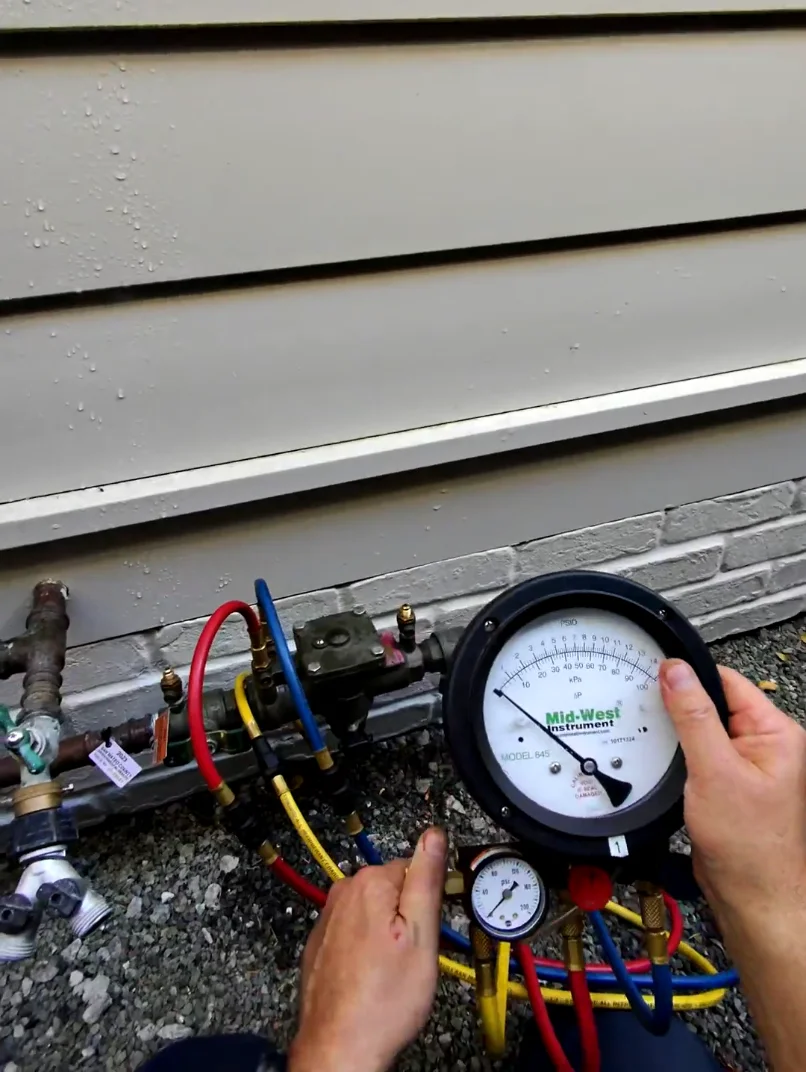
Midwest Model 845 test kit hoses connected to the assembly’s test cocks.
The risks of uncertified testing
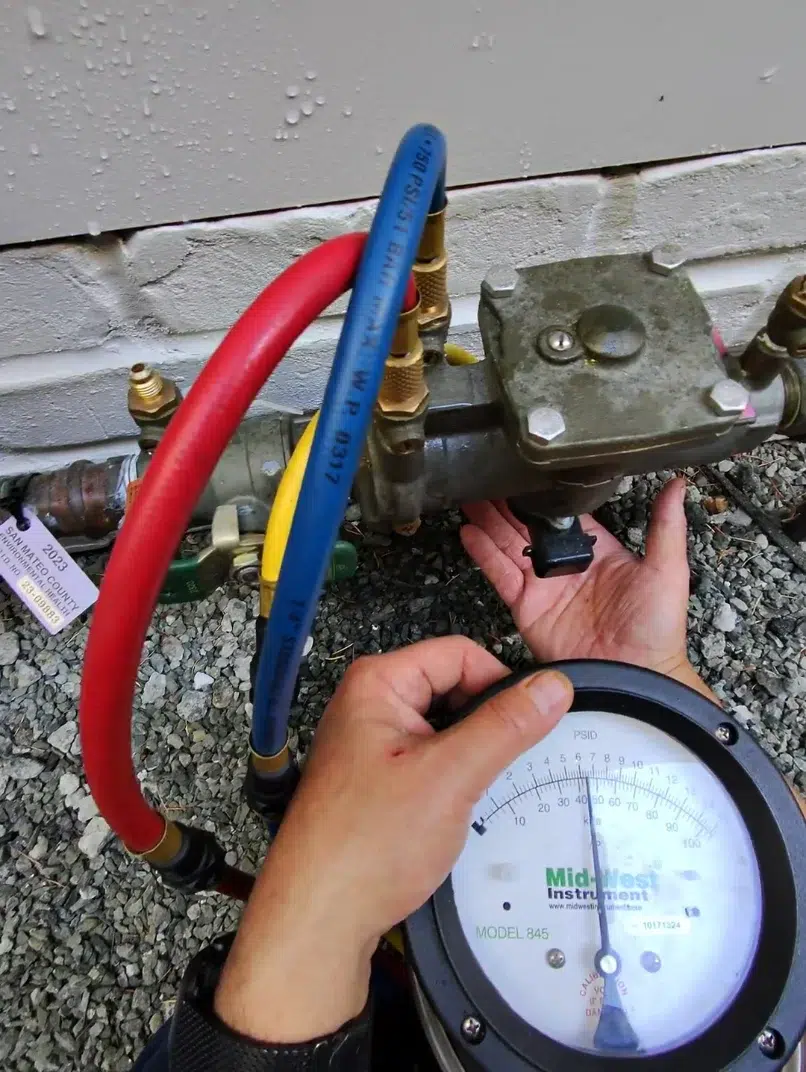
Close-up of the Midwest Model 845 differential pressure gauge showing the reading.
From the technician’s field notes
AP
Reading 1
9.2 psid
The first check valve held a strong differential, so the primary barrier against backflow is doing its job.
R
Reading 2
3.0 psid
The relief valve opened cleanly and on cue, so the last line of defense fires exactly when it should.
CT
Reading 3
8.7 psid
The second check valve stayed closed tight, so the backup barrier is fully intact.
✓
Reading 4
8.6 psid
A confirming re-read on the second check. A steady number on the repeat is what seals the pass.
Values transcribed from the on-site test.
An in-depth look at the testing process
Backflow preventers contain three separate valves that defend the line, and any one of them can fail without warning. You won’t notice this unless all three fail at the same time, so our certified testers always check each one individually.
Step 04 · Sign-off
Finished, Filed, and Completed
All proper documentation completed and handed in to the local water purveyor on your behalf.
With all four readings logged, the technician reversed the hookup in the same deliberate order, shutting the test cocks (high, then low, then the flow cock), venting the gauge, and pulling the hoses. Only then did he turn the customer’s water back on and cap every test cock.
The assembly passed. Our technician documented the test on-site before leaving, then filed a copy with the appropriate authority on their behalf afterward.
3 Years
since the client’s last test was scheduled
1
short, easy visit to get back on track
Passed
and certified for another year.
“Overall, the job went well. The backflow device was installed a little too low, but the customer was satisfied and plans to have us return next year for testing. The job went as expected. We also informed the customer about our water suppression system.”
Certified Backflow Tester · Caccia Home Services
What Actually Kept This Commercial Customer Safe?
There are three core goals that must be achieved on every backflow testing call.
One
High-Precision Work
Careful attention to every step of the process is essential for protecting the client’s compliance needs and the space itself from harm.
Two
Code Compliance
We only send out Certified Testers when you call so you can rest easy knowing the task is in good hands. Want to confirm? Just ask your technician for proof.
Three
Putting Prevention First
Backflow checks are an essential part of plumbing system maintenance that keeps repair costs down. With Caccia, you never need to miss another one.


