Skip to content
  (650) 442-1470

 (650) 442-1470
Updated February 2026
Summary:
It’s especially important to save water during the summer months in California because outdoor watering and high temperatures increase demand on the fresh water supply. Climate change and drought cycles are already leading to shortages in some areas year-round, but long showers, leaky plumbing, and wasteful habits don’t help. You can reduce the amount of water you use at home by scheduling regular plumbing inspections, upgrading to high-efficiency appliances, and limiting how long you run the water.
| Section | Details |
|---|---|
| Time to Read | 6–8 minutes |
| What You’ll Learn |
|
| Next Steps |
|
California has a long history of drought conditions, but dry spells aren’t the only reason why it’s important to conserve water here in the state. Summer weather also leads to more outdoor watering and a general increase in demand for fresh water right across the board.
Add in the effects of climate change, which are leading to hotter, drier summers and less snowpack in the mountains, and you have a recipe for water scarcity and shortages. But even that isn’t the only reason why it’s so critical for all of us to do our part to reduce waste whenever we can.
In this guide, you’ll learn how water typically gets wasted, what can happen when the water supply is mismanaged, and what you can do to reduce your use at home. Take a look, then give us a call to learn how upgrading to high-efficiency systems like heat pump water heaters can help!
How Water Gets Wasted
Water waste comes from two main sources: everyday losses inside the home and larger systemic influences that are beyond the average homeowner’s control. Both can contribute to long-term water scarcity problems here in the Bay Area.
At Home
Most residential water waste comes from routine plumbing issues and daily habits, not extreme misuse, although this can certainly be a factor. It’s much more common for homeowners to simply not notice that they have a problem until their utility bills rise or serious structural damage occurs.
What we tend to see the most often in Bay Area homes is:
- Sneaky leaks that hide deep within the supply line, foundation, slabs, or walls
- Faucets that leak under the sink and around the base or constantly drip throughout the day
- Dated clothes washers and dishwashers that burn through water very fast
- Lawn and landscaping habits that waste water unnecessarily or at the wrong times
- Sprinkler systems that either leak or are set to go off during peak daytime heat
Even a minor leak in a toilet can waste hundreds of gallons of water per day. But in the summer, inefficient outdoor watering practices and delayed home maintenance can turn into a serious source of loss.
Outside the Home
Water waste also occurs across the systems that extract, treat, and deliver water at scale, in local industries, and in some cases, even the local environment itself. There’s a complex web of influences at play that can make it even harder to limit loss and manage the available supply of water.
This includes:
- The need for irrigation in agriculture, which accounts for up to 40% of all demand
- Spillage that occurs during the extraction process, storage, or transport
- Leaks or breakdowns that occur in state or county pipelines and infrastructure
- The high demand for both water and energy during treatment and distribution
- Concerns about chemical, environmental, or pharmaceutical contamination
- The need to protect threatened wildlife and sensitive ecosystems
Arid conditions in some areas of the state, like parts of San Bernardino County, also just don’t have much available water in the first place. Or, they might require more sanitation to make it potable (safe to drink and use). Environmental factors like these can be some of the most challenging to address.
The Effects of Water Mismanagement
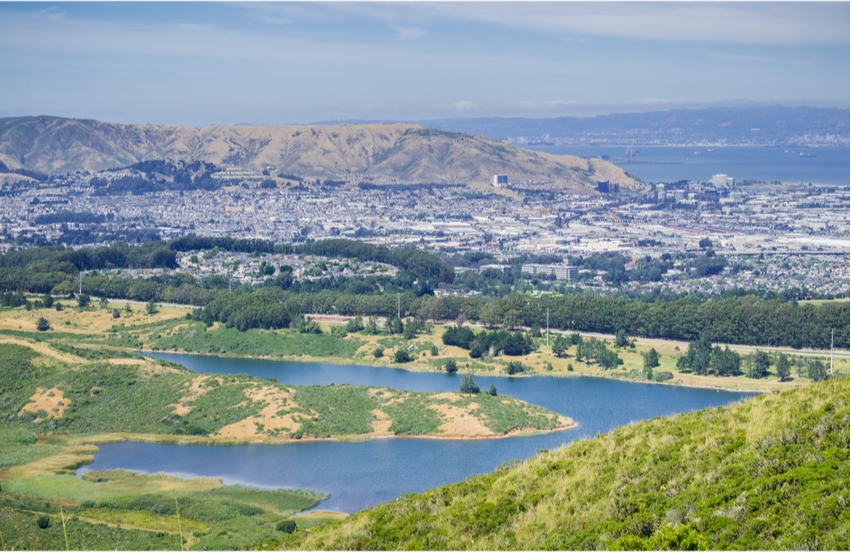
Countless agencies are working hard to preserve California’s watersheds, groundwater tables, and other sources of fresh drinking water around the clock. The SWRCB’s 2024 “Making Conservation a California Way of Life” framework, for example, is helping cities and suppliers set new conservation standards.
Programs like these are incredibly important because the side effects of water waste can have profoundly negative effects both at home and all across the globe.
Chronic mismanagement has been linked to:
- A permanent reduction of available water in some areas
- Higher water and energy bills for residential and commercial customers
- More frequent droughts, water use restrictions, and disruptions in the supply
- Higher temperatures and lower humidity levels all across the planet
- Damage or complete collapse of rivers, wetlands, and wildlife habitats
- The effects of climate change, including severe weather like floods or fires
A January 2026 report from the United Nations (UN) University’s water institute paints an even more troubling picture by stating that the world is entering an era of “global water bankruptcy.”
Realistically, reducing waste here in the Bay Area won’t fix everything, but that doesn’t mean it isn’t helpful at all. Doing something is always better than nothing, and it still helps protect the local supply.
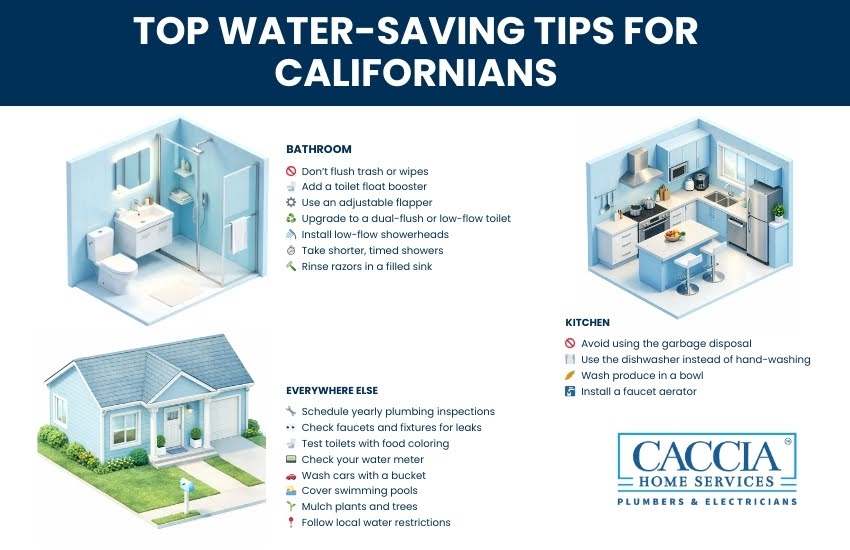
Top Water Saving Tips for Californians
Now that you have a clearer picture of what’s at stake, it’s time to turn info into action. The good news is that you don’t even really need to change your lifestyle that much to conserve water. Just being a little more aware of how you use it and following best practices like these helps big-time!
Tips for Beginners
The first step toward achieving a water-efficient home is changing your mindset. Remind yourself that you don’t always need to shower for half an hour or have the tap running while brushing your teeth. Start there, and then add in the room-by-room tips in the next few sections.
In the Bathroom
The bathroom is one of the most common places for water loss to occur because almost everything you do while you’re in it depends on water. These tips will help you conserve water while you shower, wash your hands, shave, or just go about answering mother nature’s call.
| Tip | Why it matters |
|---|---|
| Don’t flush trash | It takes significantly more water to flush cigarette butts, wipes, and other non-biodegradable items. It can also cause noisy clogs! |
| Add a float booster | Raising the level of water artificially can save up to 10 gallons of water per day without interfering with the ability to flush. |
| Use an adjustable flapper | This simple device lets you control the flush rate per flush for more effective flushing and less waste. |
| Upgrade your toilet | Dual flush sets flush rates for “number 1” and “number 2.” Low-flush toilets permanently reduce the flow rate per flush. |
| Install low-flow showerheads | You get the same great experience while using much less water per minute. |
| Take shorter showers | Limit yourself to a specific amount of time or install a timer to automatically turn it off when the time’s up. |
| Rinse razors in a filled sink | Fill it up, rinse your razor, then dump it. You’ll still use less water than running it under the tap. |
In the Kitchen
Whether you’re baking or just cleaning up after a chaotic dinner with the kids, having access to water in the kitchen is a must. These simple steps help you reduce your use and make the most of it.
| Tip | Why it matters |
|---|---|
| Avoid using the garbage disposal | In-sink garburators add significantly to the volume of sediment in wastewater and use a lot of water |
| Use a dishwasher instead of hand-washing | A high-efficiency dishwasher can save up to 5,000 gallons of water per year |
| Wash produce in a bowl | Filling a bowl uses less water than rinsing produce under a running tap |
| Install a faucet aerator | Aerators clean just as effectively while reducing overall water use |
Everywhere Else
From the laundry room to your plumbing infrastructure, water conservation doesn’t stop in the kitchen or bathroom. You can reduce your risk for loss, leaks, and even wilted plants with tips like these.
| Tip | Why it matters |
|---|---|
| Schedule yearly plumbing inspections | Hidden leaks can waste up to 20 litres of water per day. Inspections help you spot and fix them early. |
| Check for leaks often | Inspect fixtures, faucets, and pipe connections for drips, leaks, rust, water damage, and wet spots. Have problems fixed right away! |
| Test for toilet leaks | Fill your toilet tank with a little food coloring. If, after 30 minutes without flushing, you see color in the bowl, you probably have a leak. |
| Use your water meter to test for hidden leaks | Check your household water meter, then don’t use the water for at least two hours. If it changes, you may be losing water somewhere. |
| Wash cars with a bucket | Use a bucket of soapy water to wash your car. Use the hose solely to rinse or just go to the car wash instead. |
| Cover swimming pools | This can prevent you from losing up to an inch a week, especially when summer temperatures are high. |
| Mulch plants and trees | It will help protect them from the sun and reduce evaporation. |
| Follow local water restrictions | Many cities or suppliers have time-of-day and frequency limits in place to conserve water. |
Where to Find Info On Water Restrictions
Every county and supplier has their own rules for using water in the summer. Find yours in the table below, see our post on the subject, or contact them directly, to get more info on restrictions.
| Water Supplier | Service Area (High Level) | Water Restrictions Page |
|---|---|---|
| San Francisco Public Utilities Commission (SFPUC) | San Francisco, wholesale to Peninsula & South Bay | https://www.sfpuc.gov/learning/conserve-water |
| East Bay Municipal Utility District (EBMUD) | Oakland, Berkeley, East Bay | https://www.ebmud.com/water/conservation-and-rebates |
| Santa Clara Valley Water (Valley Water) | Santa Clara County (wholesale) | https://www.valleywater.org/watersavingsorg |
| Alameda County Water District (ACWD) | Fremont, Newark, Union City | https://www.acwd.org/134/Conservation-at-Home |
| Marin Municipal Water District (MMWD) | Central & Southern Marin | https://www.marinwater.org/conservation |
| North Marin Water District | Novato, Northern Marin | https://nmwd.com/ |
| California Water Service (Cal Water) | Multiple Bay Area cities | https://www.calwater.com/conservation |
| Sonoma Water | Sonoma County (wholesale) | https://www.sonomawater.org/conservation |
| Valley of the Moon Water District | Sonoma Valley | https://www.vomwd.org/conservation |
| Bay Area Water Supply and Conservation Agency (BAWSCA) | Regional SFPUC wholesalers | https://bawsca.org/water-use-efficiency |
Get Responsible About Water Use With Caccia’s Help
Water conservation is a topic that we can all get behind. If we use this precious resource wisely, we can help keep the climate of our planet stable and healthy for future generations to come.
If you want help identifying where your home may be wasting water, Caccia Home Services is here to help. We can come out and assess your plumbing, give you advice on efficiency upgrades, and keep your systems in good working order all year-round. Schedule an appointment anytime!