(650) 442-1470

 (650) 442-1470
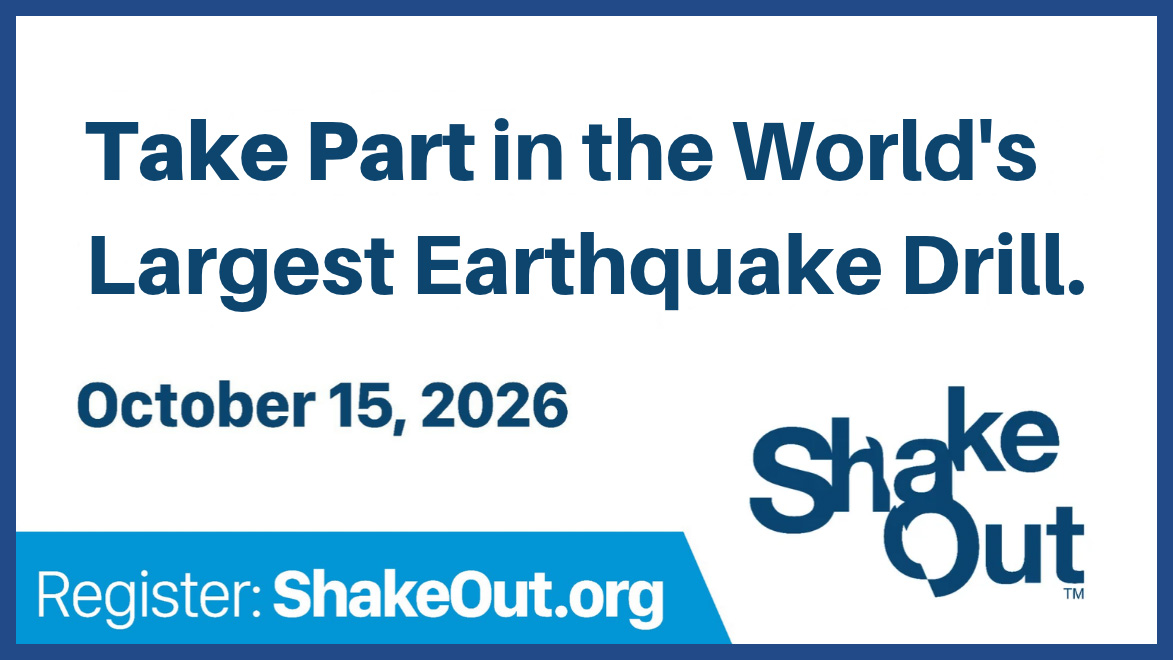
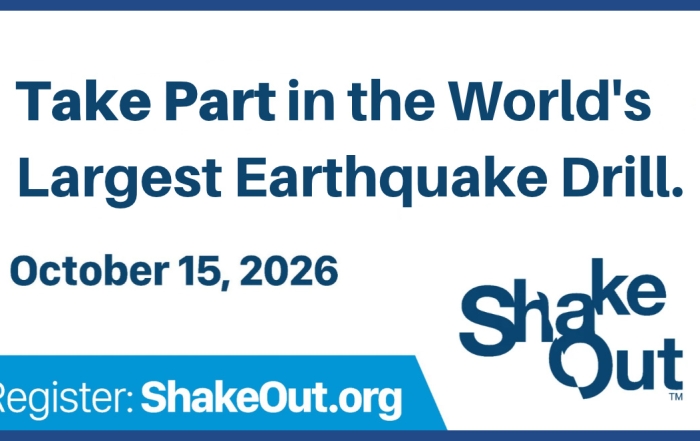
Graphics courtesy of ShakeOut.org
Summary:
The 2026 Great California ShakeOut on October 15, 2026 gives Bay Area households a chance to practice drilling for a potential earthquake before one strikes. Any individual or family can register for the event at ShakeOut.org to receive the alert. Experts like PG&E also recommend using the opportunity to have your home’s gas, water, and electrical systems inspected at the same time. Upgrades like water heater straps, flexible water/gas connectors, and seismic shutoff valves also help.
| Time to Read | 6-7 Minutes |
| What You’ll Learn |
|
| Next Steps |
|
The closest portion of the San Andreas Fault sits just two miles west of San Mateo’s city limits. That’s near enough that you might have less than 90 seconds to get yourself, your loved ones, and any beloved pets into a safer position from the moment an earthquake strikes.
Most of the earthquakes recorded around the Bay Area are so small, the average homeowner won’t even feel them, but there’s no guarantee they’ll stay that way forever. In fact, new USGS calculations put the chance of a magnitude 6.7 or greater earthquake striking the region within the next 30 years at 74%.
This year’s Great California ShakeOut falls on Thursday, Oct 15 at 10:15 a.m., and it’s an ideal opportunity to review your earthquake preparedness plan in full. We’ll walk you through the basics so you know how to run the drill with your family, then tell you how we can help you prepare your home, in this guide.

Animation courtesy of the Southern California Earthquake Center
What Is the Great California ShakeOut?
The Great ShakeOut is the world’s largest earthquake drill, with millions of people participating across California and around the globe. International ShakeOut Day takes place on the third Thursday of October each year, but you don’t need to belong to a school or workplace to participate.
The actual drill only takes about a minute. When it starts:
- Drop: Get down on your hands and knees so the shaking can’t knock you over.
- Cover: Protect your head and neck under a sturdy desk or table if one is nearby.
- Hold On: Stay under your cover and hold onto it until the drill ends.
ShakeOut recommends staying in position for at least one minute, just as you would during an actual earthquake. We also recommend spending a little time in the lead-up talking to your children and running through practice drills so the steps feel familiar.
If you use the MyShake app, you’ll also receive a test earthquake alert on your phone. Bay Area users are scheduled to receive the 2026 alert at 10:14 a.m., one minute before the 10:15 a.m. drill.
Register your household for the Great ShakeOut Here
![Aerial view of collapsed sections of the en:Cypress Viaduct of en:Interstate 880. [H.G. Wilshire, U.S. Geological Survey]](https://cacciaplumbing.com/wp-content/uploads/Loma-pierta-1989-earthquake.jpg "Great ShakeOut 2026: Practice the Drill, Then Get Your Home Ready 2")
Why Does the Great ShakeOut Matter So Much?
Knowing what to do during an earthquake is one thing. Doing it immediately while the floor is moving and objects are falling around you is another. Practicing Drop, Cover, and Hold On ahead of time helps make the right response feel more automatic when every second matters.
The latest data should give everyone a good reason to take it seriously:
- The last USGS estimate put the Bay Area-wide chance of a magnitude 6.7+ quake at 72%.
- That means the chance for a serious earthquake in the area is currently on the rise.
- For the Hayward-Rodgers Creek system, the risk is closer to 34%, which is still pretty high.
- The San Andreas Fault isn’t exactly in the clear either, with its risk now at 25.5%.
- This year’s event falls just two days before the anniversary of the 1989 Loma Prieta earthquake.
Any local resident who was here in the late 1980s probably remembers the tragedy that came along with the Loma Prieta event. The magnitude 6.9 earthquake killed a total of 63 people, cost billions of dollars in property damage, and forced some communities to spend years rebuilding from it.
We all hope it will never happen again, but if it does, the time you put into practicing the drill and getting your home ready just might save your life—or even your home itself.
Why You Need a Plan for Your Home, Too
Heavy shaking is just as damaging for the gas, water, and electrical systems you rely on every day as it is to the average person. The cost associated with repairs or even replacements after the fact alone can be enough to put serious financial strain on your household, and there’s no guarantee insurance will cover it.
- An unstrapped water heater can topple and break gas or water lines.
- Rigid gas connections can crack when appliances shift.
- A broken pipe can keep flooding your home while you’re away.
- Damaged electrical wiring can create new fire or shock hazards.
Getting ahead of problems like these protects your home and makes the aftermath easier to manage. If your major systems are already secured, you can focus on your family, pets, and aftershocks instead of scrambling to escape a dangerous gas leak or stop the water because of a burst pipe.
Should Your Plan Include Turning Off the Gas?
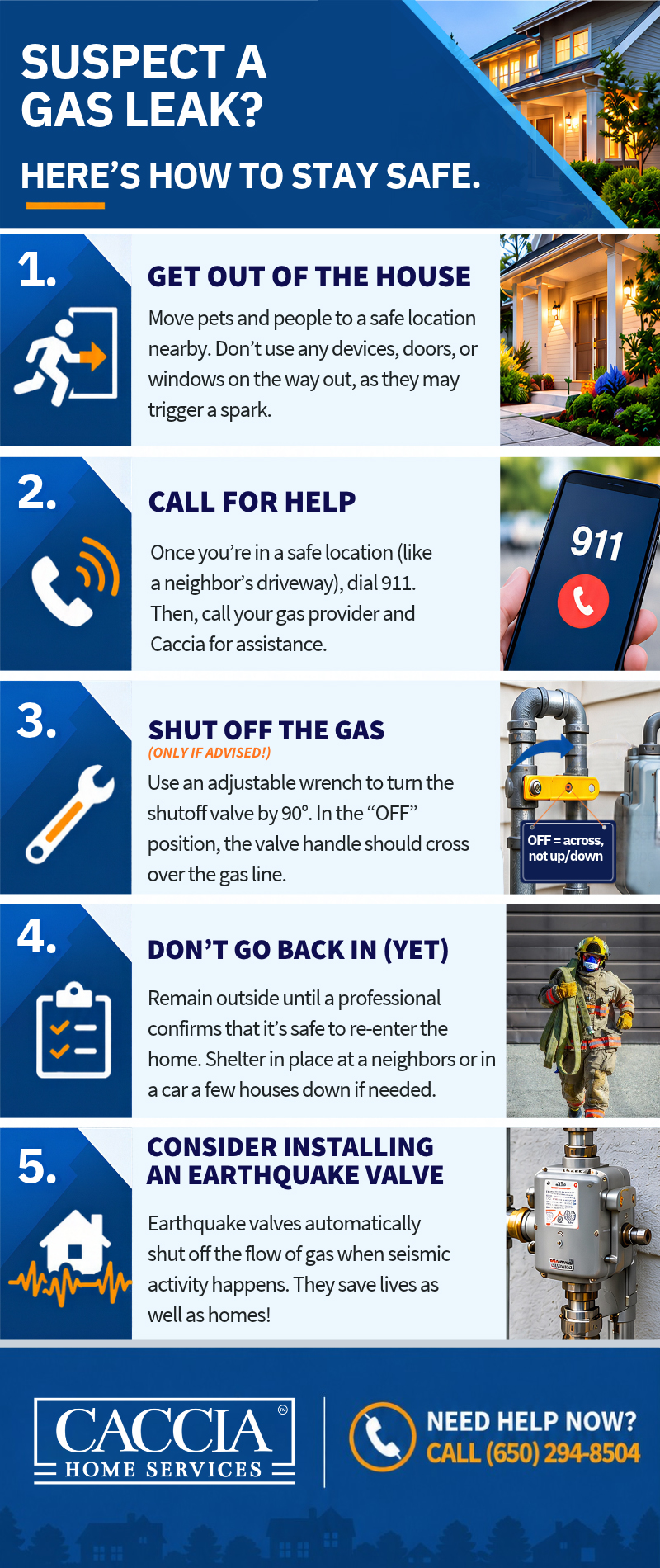
Surprisingly, the answer to this question isn’t always yes. According to PG&E, you should only turn it off if you smell gas, hear hissing or see damage, because only the utility can turn it back on afterward. In a true natural disaster, that might leave you without access for days.
This is a great example of what people commonly get wrong about earthquake preparedness, because it’s not just about knowing where your shutoffs are or how to turn them off. There’s so much more involved.
If you do believe you have a leak, check out this infographic so you know exactly how to respond.
What Does Proactive Home Protection Look Like?
California sets specific standards for earthquake preparedness. Some projects are non-negotiable and required by law, while others are just strongly recommended. Taking action to put each one into practice before an event happens will significantly improve your protection and make your home safer.
Browse them quickly in the table below, then read on to learn more about each one.
| Upgrade | Required or Recommended? | Permit? | What It Protects | What You Won’t Have to Do in an Emergency | Caccia Service |
| Water Heater Strapping | Legally required | Depends on the work | Heater, gas, and water lines | Deal with a toppled heater | Inspection and upgrades |
| Flexible Water/Gas Connectors | Strongly recommended | Depends on the work | Gas and water connections | Respond to a broken rigid line | Inspection and upgrades |
| Earthquake Gas Shutoff Valve | Legally required in some areas | Yes | Main gas supply | Rush to shut off the gas | Installation and testing |
| Automatic Water Shutoff | Strongly recommended | Yes | Plumbing, exterior, and interior | Race to stop a major leak | Installation and programming |
| Appliance Gas Shutoff Valves | Legally required | Depends on the work | Individual gas appliances | Shut off gas to the whole house | Inspection and testing |
| Electrical Safety Inspection | Strongly recommended | Only for upgrades | Panel and electrical circuits | Navigate hazards during a quake | Inspection, repairs, and upgrades |
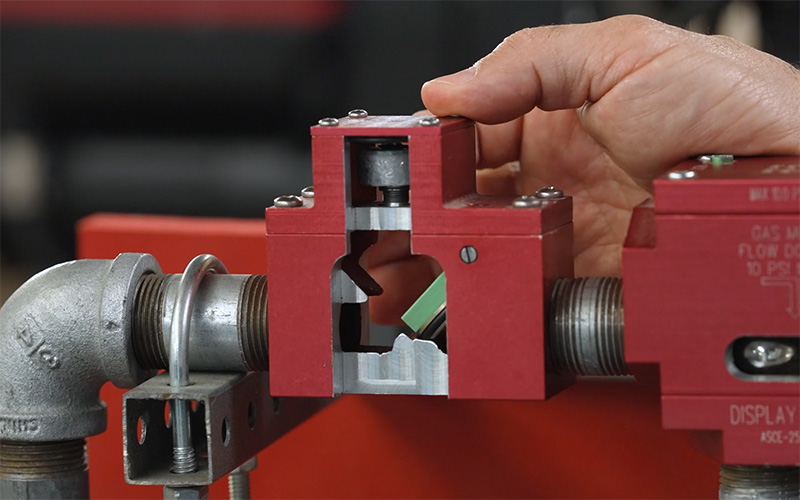
1. Automatic Earthquake Gas Shutoff Valve
An earthquake gas shutoff valve automatically cuts the flow of gas to your home the moment a quake strikes. In California, you’re only permitted to use state-certified devices that are installed and tested, but we can help you navigate the specifics and install or test your existing unit for a great price.
2. Water Heater Strapping and Flexible Connectors
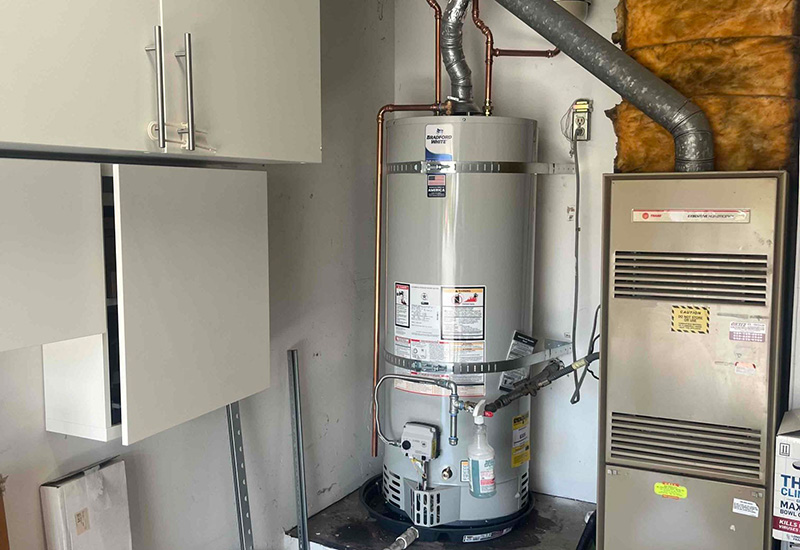
California law requires all new, replacement, and existing residential water heaters to be braced, anchored, or strapped in place so they don’t move or fall in a quake. The state also strongly recommends using code-compliant flexible connections for all connected lines. Caccia’s pros can handle every step of the job from shopping for the right parts to final inspections and testing.
3. Automatic Water Shutoff System
An automatic water shutoff system detects unusual flow or moisture and closes your main valve before a leak turns into a major flood. It’s designed to continue operating even if you’re out of the house or need to evacuate, which is why it’s so useful to have during an earthquake. Caccia’s licensed pros can help with product selection, installation, and testing so you’re always protected.
4. Gas Line Inspection and Appliance Shutoff Valves
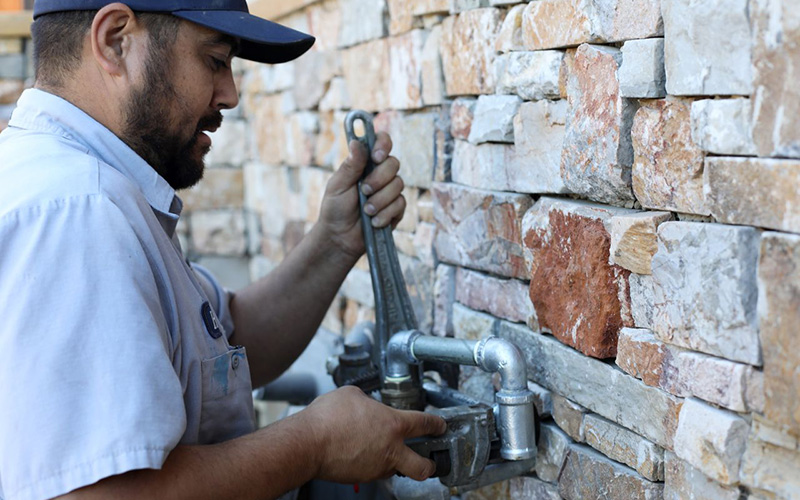
During a gas line inspection, Caccia’s licensed plumbers carefully check all connections, pipes, and fittings for signs of vulnerability, damage, or leaks. Issues like these can easily turn into a full-on fire, burns, or serious illness if an earthquake hits, so it’s vital to find and resolve them as early as possible.
Individual appliance shutoff valves are a little different, and offer an extra layer of protection that stops the flow of gas to one appliance at a time. They help to limit the risk of on-the-spot leaks without forcing you to potentially wait days to have access to other devices at the same time.
Trying to inspect or install devices like these is dangerous and often illegal. It’s safer for everyone (including you) to let Caccia’s licensed pros handle the work for you by scheduling a service call.
5. Electrical Panel Safety Inspection
Earthquakes don’t need to create a brand-new electrical problem to cause trouble. Shaking can make an existing issue with wiring, grounding, circuits, or the panel itself much more dangerous to you and increase the risk of a residential fire. Panels can carry voltages strong enough to cause serious injury or harm, too, especially if they’re older, overloaded, or short-circuiting.
Your life is much too important to take that risk, so never try this on your own. Caccia’s licensed electricians know how to handle the inspection and any repairs safely and accurately.
What You Can Do Right Now At Home
Start by locating your home’s gas, water, and electrical shutoffs now, and show everyone else who lives in the home where they are and how to turn them off. Tell kids under 18 to let an adult know right away if there’s an issue instead. You don’t want the first time you go looking for one to be during an emergency.

Book Your Pre-ShakeOut Home Check Now
Earthquakes are part of life in the Bay Area, and for all of us at Caccia, helping you get ready for them is about so much more than just booking another service. We live and work in the same communities, so helping our neighbors prepare for them is just our way of doing the right thing.
Schedule a pre-ShakeOut home check before Oct 15. Call (650) 442-1470 or book online.
FAQs About the Great ShakeOut and Earthquake Preparedness
When is the 2026 Great ShakeOut?
The 2026 Great California ShakeOut takes place on Thursday, Oct. 15 at 10:15 a.m. Bay Area households that register their participation on the MyShake app are scheduled to receive a test alert at 10:14 a.m.
Should I turn off my gas after an earthquake?
No, not necessarily. PG&E recommends that customers only shut off the gas if they believe they can smell it, hear hissing, or see visual signs of damage on the lines or meter itself. Otherwise, leave it on.
Does California require water heater strapping?
Yes! All residential water heaters must be braced, anchored, or strapped in place to reduce the risk of them falling if an earthquake hits. It’s a fairly affordable upgrade that can save you money and make your home safer at the same time.
What does an automatic earthquake gas shutoff valve do?
An automatic earthquake gas shutoff valve automatically stops the flow of gas to your home when seismic activity reaches a set level. It’s an essential piece of equipment that can greatly reduce your risk for a gas leak or residential fire.
Who turns my gas back on after it’s been shut off?
If you shut off your gas after an earthquake, you must contact PG&E before turning it back on. They need to check the system and make sure it’s safe beforehand.